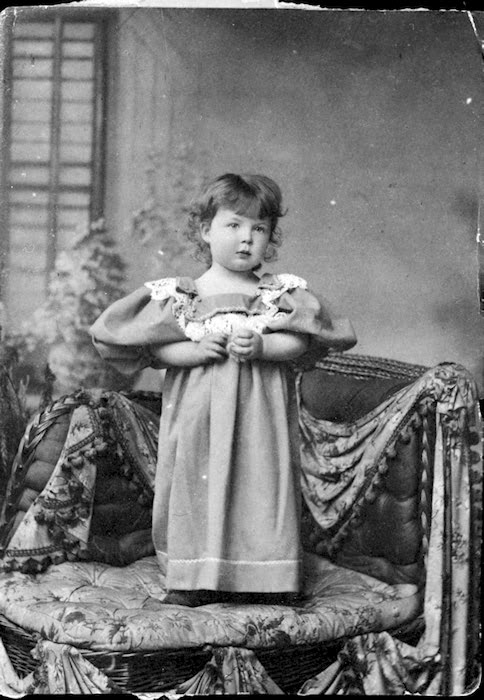
“PETER: You mustn’t touch me.
WENDY: Why?
PETER: No one must ever touch me.
WENDY: Why?
PETER: I don’t know.
(He is never touched by anyone in the play.)”
(J. M. Barrie, Peter Pan, 1904.)
“PETER: You mustn’t touch me.
WENDY: Why?
PETER: No one must ever touch me.
WENDY: Why?
PETER: I don’t know.
(He is never touched by anyone in the play.)”
(J. M. Barrie, Peter Pan, 1904.)
“When asked by President Kennedy what she does all day, she admits she is ‘stumped’. A disarmingly simple soul – ‘I now prefer horse shows to lovers & I’ve never liked drink’ – the Duchess is at her best on varieties of gooseberry and rare breeds of cattle.”
(Kate McLoughlin, review of In Tearing Haste: Letters between Deborah Devonshire and Patrick Leigh Fermor, ed. Charlotte Mosley, p. 26 of the 28 November 2008 edition of the Times Literary Supplement.)
“Before Archimboldi left, after they’d had a cup of tea, the man who rented him the typewriter said:
‘Jesus is the masterpiece. The thieves are minor works. Why are they there? Not to frame the crucifixion, as some innocent souls believe, but to hide it.’ ”
(Roberto Bolaño, 2666, trans. Natasha Wimmer, p. 790.)
“Amalfitano had some rather idiosyncratic ideas about jet lag. They weren’t constant, so it might be an exaggeration to call them ideas. They were feelings. Make-believe ideas. As if he were looking out the window and forcing himself to see an extraterrestrial landscape. He believed (or liked to think he believed) that when a person was in Barcelona, the people living and present in Buenos Aires and Mexico City didn’t exist. The time difference only masked their nonexistence. And so if you suddenly traveled to cities that, according to this theory, didn’t exist or hadn’t yet had time to put themselves together, the result was the phenomenon known as jet lag, which arose not from your exhaustion but from the exhaustion of the people who would still have been asleep if you hadn’t traveled. This was something he’d probably read in some science fiction novel or story and that he’d forgotten having read.”
(Roberto Bolaño, 2666, trans. Natasha Wimmer, p. 189.)
“Trivial details illuminate the course of control through the distributing agencies. Forty years ago you could have records sent home to you on approval, in line with the customs of a liberalism which formally, at least, respected the customer’s taste. Today you find the more expensive albums citing copyright laws and the like in order to keep the stores from furnishing them on approval: ‘Sales conditions for Germany: Rerecording our records as well as recording broadcast of our records on tape or wire, even for private use, is forbidden. To avoid rerecordings without permission, dealers are not allowed to loan, rent, or furnish records on approval.’ The possibility of abuses cannot even be denied; the worst can now almost always cite irrefutable reasons – they are the medium in which evil becomes reality. In any case the pig must be bought in a poke, for listening to records in the poorly insulated cells of stores is a farce. Complementing it is the maxim that the customer is king because he can enjoy Bruckner’s entire Seventh Symphony in the privacy of his home. Whether such tendencies will change with market conditions remains to be seen.”
(Theodor Adorno, Introduction to the Sociology of Music (1962), p. 201.)
“When I flew in to read at Brown, we first of all marched around the parking lot, reviewing the literary situation.”
(Paul West, “John Hawkes”, p. 13 in Sheer Fiction, Vol. IV.)
“As for those who so exalt incorruptibility, inalterability, I believe they are brought to say these things through their great desire to live a long time and through the terror they have of death. And not considering that, if men were immortal, these men would not have had an opportunity to come into the world. They would deserve to encounter a Medusa’s head, which would transform them into statues of jasper or of diamond, to make them more perfect than they are;. . . . And there is not the slightest doubt that the Earth is far more perfect, being, as it is, alterable, changeable, than if it were a mass of stone, even if it were a whole diamond, hard and impenetrable.”
(Galileo, from Dialogue on the Two Great Systems, giornata 1, quoted in Paul West’s Sheer Fiction, Volume Three, p. 51.)
“– cooking custard with skin – dropping it – retrieved by a young man from the floor . . .
in the dream girls were in their stone uniforms
and in real life the mother can serve you bkfst and there will be still the remoteness of a dream – “
(Joseph Cornell’s Dreams, ed. Catherine Corman, p. 40.)
“It was the Nativity scene, with Mary and Joseph and a cow and a donkey on each side of the baby, who was spiked all over with rays like a golden porcupine.”
(Denton Welch, A Voice through a Cloud, p. 151)