“And in the midst of all this, I noticed her hands becoming strangers to each other, bumping like two blind puppies.”
(Brian O’Doherty, The Strange Case of Mademoiselle P., p. 100)
“And in the midst of all this, I noticed her hands becoming strangers to each other, bumping like two blind puppies.”
(Brian O’Doherty, The Strange Case of Mademoiselle P., p. 100)
“ ‘You know, strictly speaking, your copy won’t be a copy.’
‘Why not?’
‘Because,’ she shifts her weight as she turns to face him, ‘copying has always been part of the culture of the icon. These zographs travelled . . .’
‘Zoo graphs?’
‘Zographs: icon painters. Vitan, Nedelko, Chevinodola, the Zaharievs, and hundred of minor ones whose names I can’t remember . . . . They travelled around carrying little more than their tools and the Hermeneia, and they . . .’
‘Carrying the what? The Ermenia?’
‘The Hermeneia, with an H: the zographs’ rule book. It supposedly originated on Mount Athos, in Greece. They’d travel around, redoing already existing subjects: literally copying older paintings. So you get the same images repeating down centuries, mutating slightly with each iteration.’
‘So Anton’s one’s a copy too?’
‘Well, yes – but beyond that, for zographs, copies aren’t secondary pieces. They’re iterations of the same sacred event. Each time you iterate you partake of the event: belong to it, as much as the last iterator did. But . . .’ ”
(Tom McCarthy, Men in Space, p. 111.)
Generally, reading palms or handwriting or faces
Is a job of translation, since the kind
Gentleman often is
A seducer, the frowning schoolgirl may
By dying to be asked to stay;
But the body of this old lady exactly indicates her mind;
Rorschach or Binet could not add to what a fool can see
From the plain fact that she is alive and well;
For when one is eighty
Even a teeny-weeny bit of greed
Makes one very ill indeed,
And a touch of despair is instantaneously fatal;
Whether the town once drank bubbly out of her shoes or whether
She was a governess with a good name
In Church circles, if her
Husband spoiled her or if she lost her son,
Is by this time all one.
She survived whatever happened; she forgave; she became.
So the painter may please himself; give her an English park,
Rice fields in China, or a slum tenement;
Make the sky light or dark;
Put green plush behind her or a red brick wall.
She will compose them all,
Centering the eye on their essential human element.
(W. H. Auden)
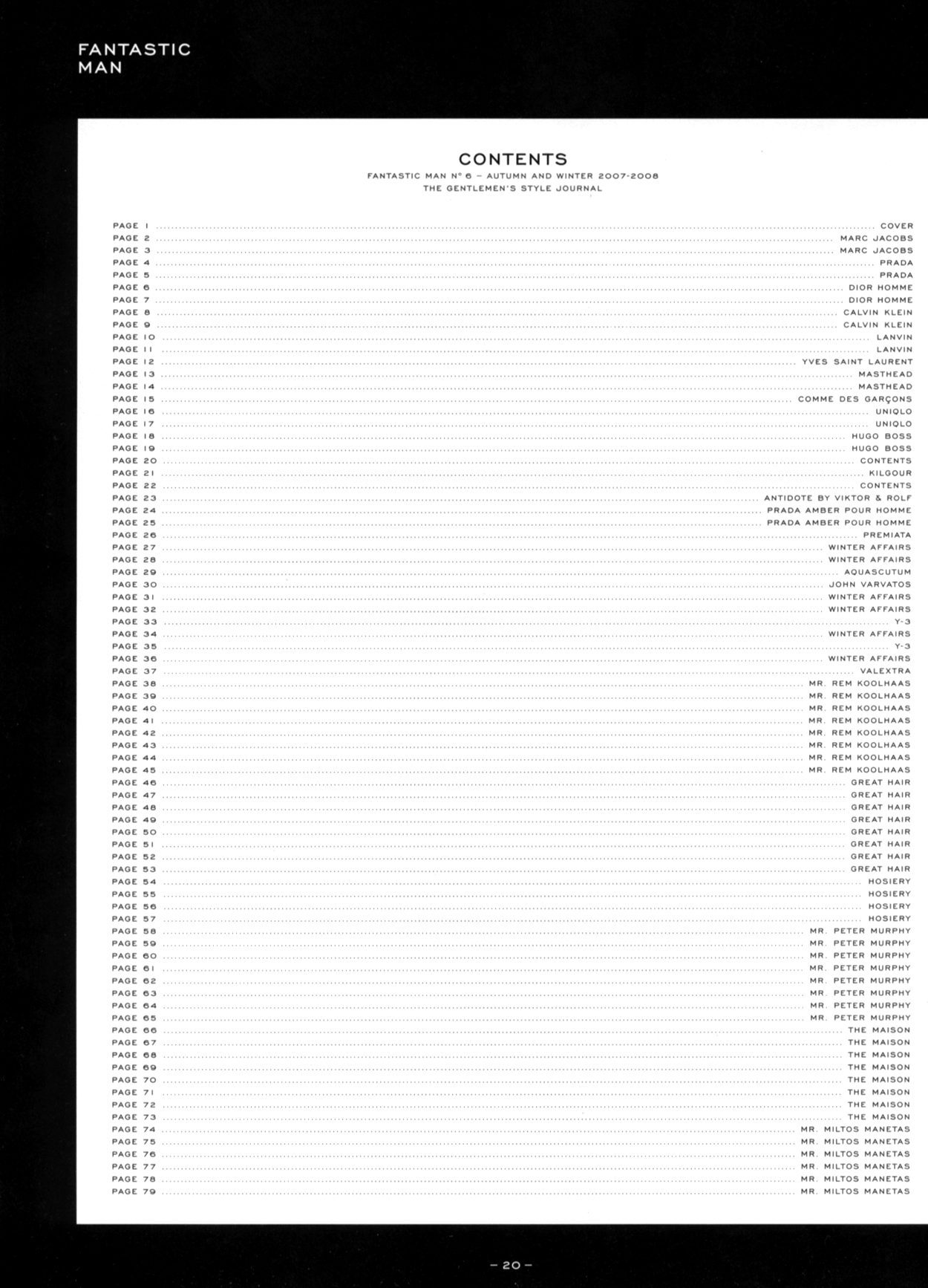
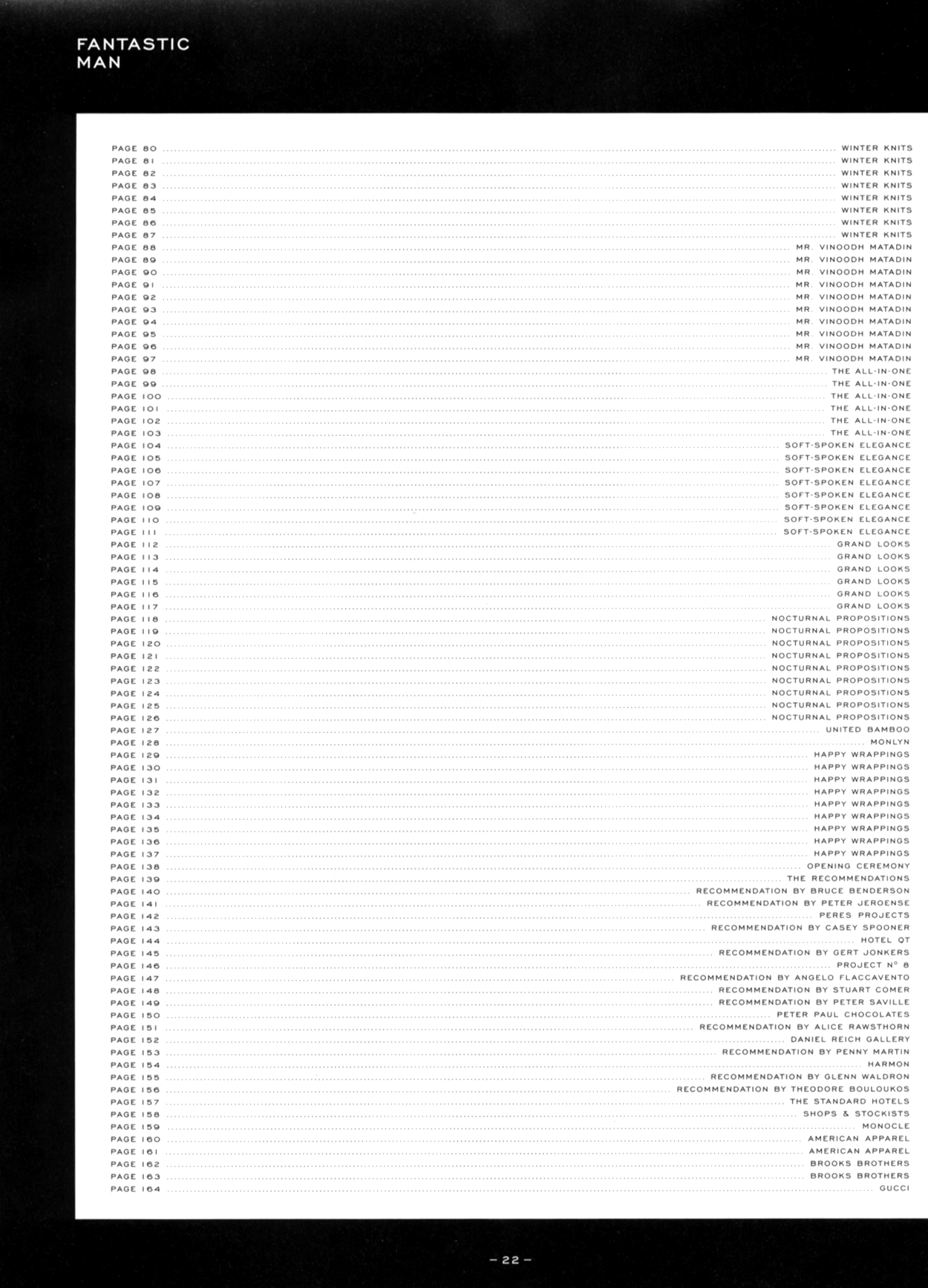
(Fantastic Man, Issue 6, pp. 20 & 22.)
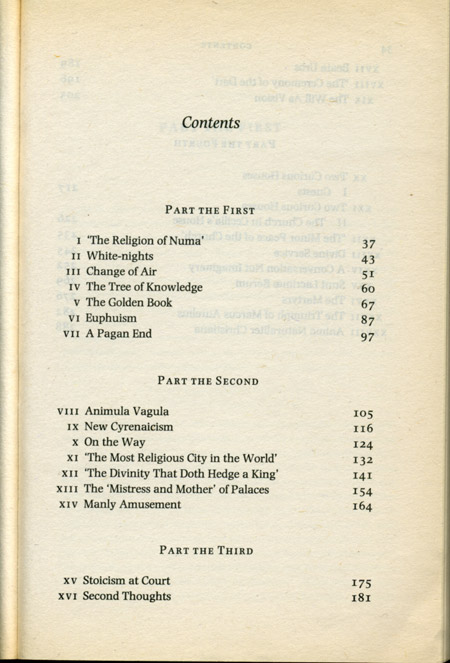
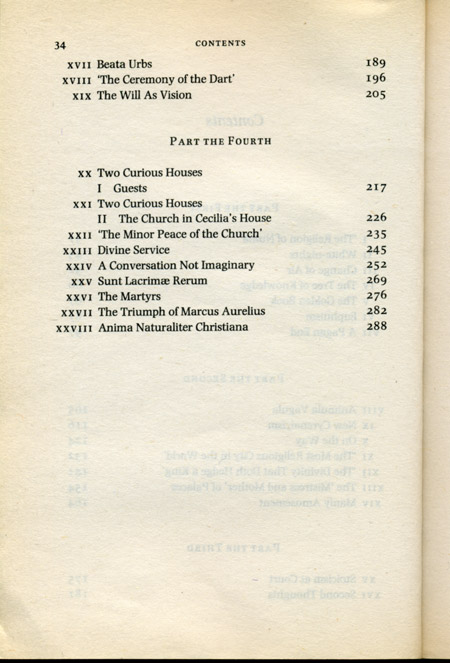
(Walter Pater, Marius the Epicurean, Penguin, 1985.)
“Love has two affirmations. First of all, when the lover encounters the other, there is an immediate affirmation (psychologically: dazzlement, enthusiasm, exaltation, mad projection of a fulfilled future: I am devoured by desire, the impulse to be happy): I say yes to everything (blinding myself). There follows a long tunnel: my first yes is riddled by doubts, love’s value is ceaselessly threatened by deprecation: this is the moment of melancholy passion, the rising of resentment and of oblation. Yet I can emerge from this tunnel; I can ‘surmount’ without liquidating; what I have affirmed a first time, I can once again affirm, without repeating it, for then what I affirm is the affirmation, not its contingency: I affirm the first encounter in its difference, I desire its return, not its repetition. I say to the other (old or new): Let us begin again.“
(Roland Barthes, A Lover’s Discource: fragments, trans. Richard Howard, p.24.)
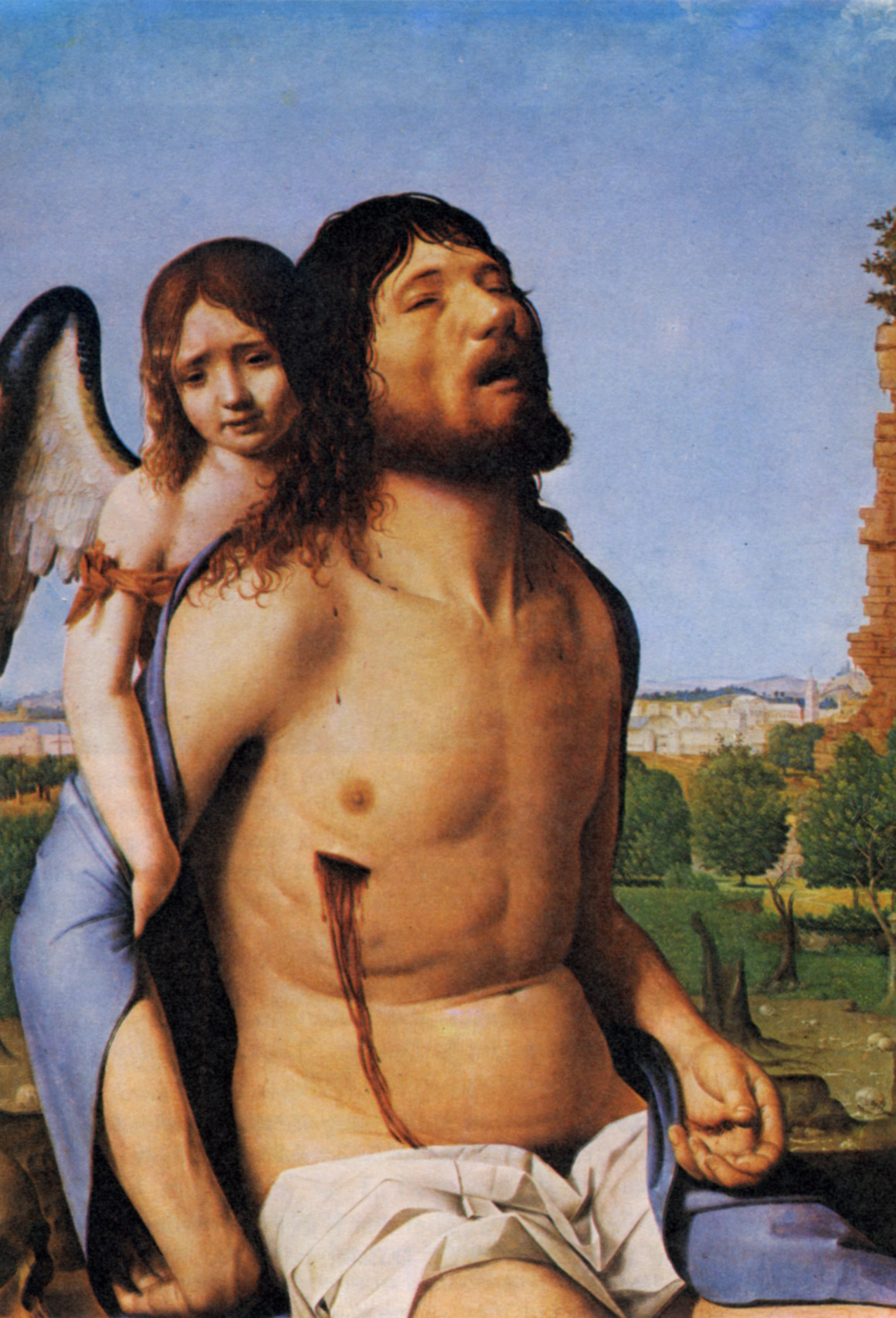
(Antonello da Messina, The Dead Christ Supported by an Angel, 1475–9, Prado.)
Picasso made me tough and quick, and the world;
just as in a minute plane trees are knocked down
outside my window by a crew of creators.
Once he got his axe going everyone was upset
enough to fight for the last ditch and heap
of rubbish.
Through all that surgery I thought
I had a lot to say, and named several last things
Gertrude Stein hadn’t had time for; but then
the war was over, those things had survived
and even when you’re scared art is no dictionary.
Max Ernst told us that.
How many trees and frying pans
I loved and lost! Guernica hollered look out!
but we were all busy hoping our eyes were talking
to Paul Klee. My mother and father asked me and
I told them from my tight blue pants we should
love only the stones, the sea, and heroic figures.
Wasted child! I’ll club you on the shins! I
wasn’t surprised when the older people entered
my cheap hotel room and broke my guitar and my can
of blue paint.
At that time all of us began to think
with our bare hands and even with blood all over
them, we knew vertical from horizontal, we never
smeared anything except to find out how it lived.
Fathers of Dada! You carried shining erector sets
in your rough bony pockets, you were generous
and they were lovely as chewing gum or flowers!
Thank you!
And those of us who thought poetry
was crap were throttled by Auden or Rimbaud
when, sent by some compulsive Juno, we tried
to play with collages or sprechstimme in their bed
Poetry didn’t tell me not to play with toys
but alone I could never have figured out that dolls
meant death.
Our responsibilities did not begin
in dreams, though they began in bed. Love is first of all
a lesson in utility. I hear the sewage singing
underneath my bright white toilet seat and know
that somewhere sometime it will reach the sea:
gulls and swordfishes will find it richer than a river.
And airplanes are perfect mobiles, independent
of the breeze; crashing in flames they show us how
to be prodigal. O Boris Pasternak, it may be silly
to call to you, so tall in the Urals, but your voice
cleans our world, clearer to us than the hospital:
you sounds above the factory’s ambitious gargle.
Poetry is as useful as a machine!
Look at my room.
Guitar strings hold up pictures. I don’t need
a piano to sing, and naming things is only the intention
to make things. A locomotive is more melodious
than a cello. I dress in oil cloth and read music
by Guillaume Apollinaire’s clay candelabra. Now
my father is dead and has found out you must look things
in the belly, not in the eye. If only he had listened
to the men who made us, hollering like stuck pigs!
(Frank O’Hara)
after Frank O’Hara
It’s 8:54 in Brooklyn it’s the 28th of July and
it’s probably 8:54 in Manhattan but I’m
in Brooklyn I’m eating English muffins and drinking
pepsi and I’m thinking of how Brooklyn is New
York city too how odd I usually think of it as
something all its own like Bellows Falls like Little
Chute like Uijonbgu
I never thought on the Williams-
burg bridge I’d come so much to Brooklyn
just to see lawyers and cops who don’t even carry
guns taking my wife away and bringing her back
No
and I never thought Dick would be back at Gude’s
beard shaved off long hair cut and Carol reading
his books when we were playing cribbage and
watching the sun come up over the Navy Yard
across the river
I think I was thinking when I was
ahead I’d be somewhere like Perry street erudite
dazzling slim and badly loved
contemplating my new book of poems
to be printed on simple type on old brown paper
feminine marvelous and tough
(Ted Berrigan, from The Sonnets.)
He sleeps on the top of a mast.—Bunyan
He sleeps on the top of a mast
with his eyes fast closed.
The sails fall away below him
like the sheets of his bed,
leaving out in the air of the night the sleeper’s head.
Asleep he was transported there,
asleep he curled
in a gilded ball on the mast’s top,
or climbed inside
a guilded bird, or blindly seated himself astride.
“I am founded on marble pillars,”
said a cloud. “I never move.
See the pillars there on the sea?”
Secure in introspection
he peers at the watery pillars of his reflection.
A gull had wings under his
and remarked that the air
was “like marble.” He said: “Up here
I tower through the sky
for the marble winds on my tower-top fly.”
But he sleeps on the top of his mast
with his eyes closed tight.
The gull inquired into his dream,
which was, “I must not fall.
The spangled sea below wants me to fall.
It is hard as diamonds; it wants to destroy us all.”
(Elizabeth Bishop)