learning to see

“In addition to the traditional piano player, each theatre in Saragossa was equipped with its explicador, or narrator, who stood next to the screen and ‘explained’ the action to the audience. ‘Count Hugo sees his wife go by on the arm of another man,’ he would declaim. ‘And now, ladies and gentlemen, you will see how he opens the drawer of his desk and takes out a revolver to assassinate his unfaithful wife!’

It’s hard to imagine today, but when the cinema was in its infancy, it was such a new and unusual narrative form that most spectators had difficulty understanding what was happening. Now we’re so used to film language, to the elements of montage, to both simultaneous and successive action, to flashbacks, that our comprehension is automatic; but in the early years, the public had a hard time deciphering this new pictorial grammar. They needed an explicador to guide them from scene to scene.

I’ll never forget, for example, everyone’s terror when we saw our first zoom. There on the screen was a head coming closer and closer, growing larger and larger. We simply couldn’t understand that the camera was moving nearer to the head, or that because of trick photography (as in Méliès’s films), the head only appeared to grow larger. All we saw was a head coming toward us, swelling hideously out of all proportion. Like Saint Thomas the Apostle, we believed in the reality of what we saw.”

(Luis Buñuel, My Last Sigh, trans. Abigail Israel, p. 32–33.)
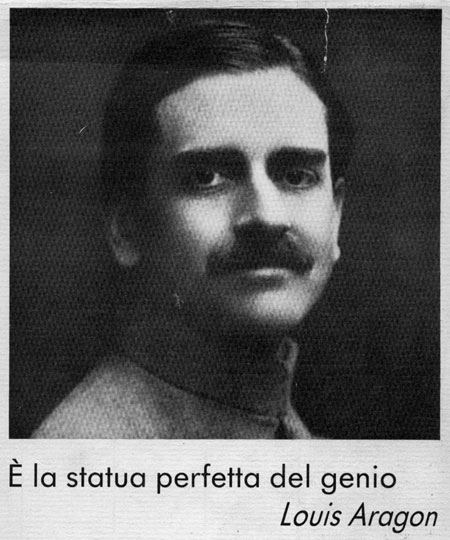
on transience

“My conversation with the poet took place in the summer before the war. A year later the war broke out and robbed the world of its beauties. It destroyed not only the beauty of the countrysides through which it passed and the works of art which it met with on its path but it also shattered our pride in the achievements of our civilization, our admiration for many philosophers and artists and our hopes of a final triumph over the differences between nations and races. It tarnished the lofty impartiality of our science, it revealed our instincts in all their nakedness and let loose the evil spirits within us which we thought had been tamed for ever by centuries of continuous education by the noblest minds. It made our country small again and made the rest of the world far remote. It robbed us of very much that we had loved, and showed us how ephemeral were many things that we had regarded as changeless.

We cannot be surprised that our libido, thus bereft of so many of its objects, has clung with all the greater intensity to what is left to us, that our love of our country, our affection for those nearest us and our pride in what is common to us have suddenly grown stronger. But have those other possessions, which we have now lost, really ceased to have any worth for us because they have proved so perishable and so unresistant? To many of us this seems to be, but once more wrongly, in my view. I believe that those who think thus, and seem ready to make a permanent renunciation because what was precious has proved not to be lasting, are simply in a state of morning for what is lost. Mourning, as we know, however painful it may be, comes to a spontaneous end. When it has renounced everything that has been lost, then it has consumed itself, and our libido is once more free (in so far as we are still young and active) to replace the lost objects by fresh ones equally or still more precious. It is to be hoped that the same will be true of the losses caused by this war. When once the mourning is over, it will be found that our high opinion of the riches of civilization has lost nothing from our discovery of their fragility. We shall build up again all that war has destroyed, and perhaps on firmer ground and more lastingly than before.”

(Sigmund Freud, “On Transience”, first published 1916, pp. 178–179 in Writings on Art and Literature, trans. James Strachey.)

to another city

“The impulse that made him travel to another city and lead a completely isolated existence, free of family ties or distractions of any kind, also seems to have made him want to preserve that experience, intact and inviolate, for himself alone. He hinted at this in a late filmed interview with the French documentary filmmaker Jean-Marie Drot. ‘In 1912 it was a decision for being alone and not knowing where I was going,’ Duchamp said. ‘The artist should be alone . . . Everyone for himself, as in a shipwreck.’ ”

(Calvin Tomkins, Duchamp, p. 93.)

are you ticklish?

We’re leaving again of our own volition
for bogus-patterned plains, shreds of maps recurring
like waves on a beach, each unimaginable
and likely to go on being so.

But sometimes they get, you know, confused
and change their vows or the ground rules
that sustain all of us. It’s cheery, then, to reflect on the past
and what it brought us. To take stone books down

from the shelf. It is good, in fact,
to let the present pass without commentary
for what it says about the future.
There was nothing carnal in the way omens became portents.

Fact: all my appetites are friendly. I just
don’t want to live according to the next guy’s trespass,
meanwhile getting a few beefs off my chest,
if that’s OK. The wraparound flux we intuit

as time has other claims on our inventiveness.
A lot of retail figures in it. One’s daily horoscope
comes in eggshell, eggplant, and, just for the heck of it,
black. ’Nuf said. The deal is off. The rest is silence.

(John Ashbery)

the more loving one

Looking up at the stars, I know quite well
That, for all they care, I can go to hell,
But on earth indifference is the least
We have to dread from man or beast.
How should we like it were stars to burn
With a passion for us we could not return?
If equal affection cannot be,
Let the more loving one be me.

Admirer as I think I am
Of stars that do not give a damn,
I cannot, now I see them, say
I missed one terribly all day.

Were all stars to disappear or die,
I should learn to look at an empty sky
And feel its total darkness sublime,
Though this might take me a little time.

(W. H. Auden, 1957)

continuing to live

Continuing to live – that is, repeat
A habit formed to get necessaries –
Is nearly always losing, or going without.
It varies.

This loss of interest, hair, and enterprise –
Ah, if the game were poker, yes,
You might discard them, draw a full house!
But it’s chess.

And once you have walked the length of your mind, what
You command is clear as a lading-list.
Anything else must not, for you, be thought
To exist.

And what’s the profit? Only that, in time,
We half-identify the blind impress
All our behavings bear, may trace it home.
But to confess,

On that green evening when our death begins,
Just what it was, is hardly satisfying,
Since it applied only to one man once,
And that one dying.

(Philip Larkin)

of modern poetry

The poem of the mind in the act of finding
What will suffice. It has not always had
To find: the scene was set; it repeated what
Was in the script.
                                Then the theatre was changed
To something else. Its past was a souvenir.

It has to be living, to learn the speech of the place.
It has to face the men of the time and to meet
The women of the time. It has to think about war
And it has to find what will suffice. It has
To construct a new stage. It has to be on that stage,
And, like an insatiable actor, slowly and
With meditation, speak words that in the ear,
In the delicatest ear of the mind, repeat,
Exactly, that which it wants to hear, at the sound
Of which, an invisible audience listens,
Not to the play, but to itself, expressed
In an emotion as of two people, as of two
Emotions becoming one. The actor is
A metaphysician in the dark, twanging
An instrument, twanging a wiry string that gives
Sounds passing through sudden rightnesses, wholly
Containing the mind, below which it cannot descend,
Beyond which it has no will to rise.
                                                                It must
Be the finding of a satisfaction, and may
Be of a man skating, a woman dancing, a woman
Combing. The poem of the act of the mind.

(Wallace Stevens)