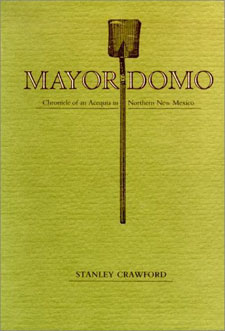
stanley crawford, “mayordomo”

Stanley Crawford
Mayordomo: Chronicle of an Acequia in Northern New Mexico
(University of New Mexico Press, 1988)


I came to Stanley Crawford through his fiction – Log of the S. S. The Mrs. Unguentine got a reissue from Dalkey Archive a few years back with an afterward by Ben Marcus, and there was a bit of attention. It’s an easy book to read, though one that will require re-reading; from there, I quickly went through Some Instructions, Gascoyne, and Travel Notes; his most recent, Petroleum Man is on a stack of things to be read. Gascoyne and Travel Notes feel like juvenilia compared to his later books; stylistically, they feel like Pynchon and Robert Kelly’s Cities, a writer trying out forms. In Log and Some Instructions, the novelist has found his subject: the relations between people. Though formally very different, both are about marriage and the unknowability of others. Crawford doesn’t present this as an endpoint, but as a position from which to think about the ethics of our interactions with others.

From this, it’s a small jump to his non-fiction: A Garlic Testament is his account of growing garlic in New Mexico, which seems to be his primary occupation; it is about growing garlic, and can be judged as such, but it’s also about the problem of how we live our lives. There’s a similarity to the two books that Gianfranco Baruchello and Henry Martin put out (How to Imagine and Why Duchamp) about Baruchello’s attempts to use Duchamp’s thoughts to run a farm: like Crawford’s books, these are meditations on the place of work in our lives, a subject that’s more and more interesting to me. Mayordomo: Chronicle of an Acequia in Northern New Mexico precedes A Garlic Testament. It’s a book about his time as the mayordomo of an irrigation ditch used by himself and the neighboring farmers in New Mexico. The givens are simple: there’s a certain amount of water in the ditch, which everyone needs; water use must thus be rationed, especially during the dry season. The ditch is community property: it must be maintained, which may require a fair amount of labor, which must be apportioned. The mayordomo is paid to keep the ditch in order. Not knowing a great deal about water law, I’m not sure if ditch councils are still in existence: writing in 1988, Crawford speculates that water rights adjudication is likely to massively overhaul how water is administered in the area. Probably western droughts and the massive influx of population into the Southwest has also changed things. But the value in this book isn’t so much in its documentary quality (though I’m sure some readers might find it important for that) or how it functions as a memoir (though it does that). Rather, it’s a study of how people organize and relate to each other, their work, and the world they share. 

There’s a focus on the interactions of communities in this book: Crawford’s ditch shares water from a river with several other ditches, and in dry seasons negotiations with representatives of other ditches are necessary. These are associations of people rather than corporate bodies: those who share the water are small-time farmers, with a few acres of crops. It’s very much a version of the American dream, but one that’s not so blind to believe in self-sufficiency. The amount of water is limited; it needs to be shared. Ditch-sharing agreements, Crawford points out, extend well before New Mexico became a state; the acequia system of management came from Spain, a remnant of an earlier time:

There are few other civic institutions left in this country in which members have as much control over an important aspect of their lives; relatively autonomous, in theory democratic, the thousand acequias of New Mexico form a cultural web of almost microscopic strands and filaments that have held a culture and a landscape in place for hundreds of years.

(p. 176.) In its extended treatment of a subject that might not initially seem interesting, this is a book that forces the reader to slow down. Here, for example, Crawford talks about horses, which he’s just admitted that he doesn’t particularly care for:

There are a few old farmers still using horses up in the higher valleys where the internal combustion engine arrived a decade later than here. The horse has its advantages. Like you it tires with work, needs rest, food, water: your rhythms are similar. A tractor, a machine, invites you to work at a pace unnatural to the body, and while the machine does the work faster and better in some ways it is also designed with complex needs that seem like deep ulterior purposes to connect you to international fossil fuel and manufacturing conglomerates, banks, insurance companies; and its waste products, unlike a horse’s, are toxic and useless.

(p. 95.) When stated this way, Crawford’s point about rhythms of the horse and the machine seems obvious; and painfully applicable to our own lives. A rural Midwestern upbringing is more than enough to inoculate one against romanticizing agrarianism; but there’s something here that’s hard for me to ignore. Maybe it’s the cultural moment we’re in, where it’s hard to look forward to anything substantially improving; maybe it’s New York in a recessionary winter. Watching Paris Is Burning – filmed here while Crawford was minding his ditch in New Mexico – the other night suggested how much the city has changed in the past twenty years: there’s so much more wealth now, but people seem less alive, less attuned to each other. We spend more time in front of computers than we do in front of other people; I won’t argue that’s entirely bad, but one does wonder about how one ought to be living.

Technological mediation seems inescapable right now: correspondingly, maintaining a ditch seems much more interesting than it might have. Crawford, it should be pointed out, was not born to his ditch: born in California, he went to U. Chicago and the Sorbonne before spending time in Greece and moving to New Mexico; he’s acutely aware that he’s a latecomer to the land, but it’s his perspective as an outsider that finds the interest of the story. It’s strange, really, how little notice has been given to his work: no mention of him can be found in the Harper’s database, where one might think he’d fit. A longer piece by Verlyn Klinkenborg appeared in the New Yorker (21 September 1995, p. 125) on the occasion of the publication of A Garlic Testament. There have been a handful of appearances in the New York Times (most notably a generally disapproving review of Travel Notes by Stanley Elkin), but not since 1992. Maybe this lack of attention will change as the increasing importance of water as a social issue has been receiving a fair amount of careful attention recently: Joseph McElroy considers water and writing (his treatment of Crawford is probably the most thoughtful this book has received); and William Vollmann’s Imperial, a book that seems to have awakened reserves of resentment in the nation’s book reviewers, is deeply concerned with the ways in which water use affects communities, amidst the myriad other forces that shape the California-Mexico border. Both McElroy and Vollmann could be read profitably against Crawford.
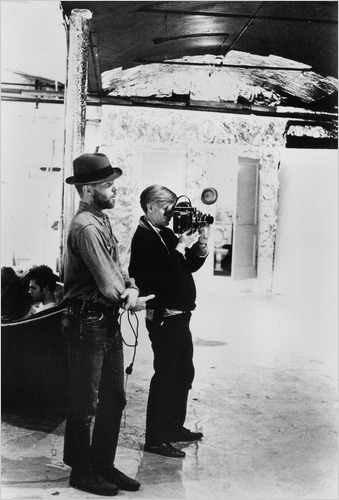
mcelroy on crawford

“. . . . What little I know about acequias in that general area – including the Rocky Mountain high-altitude meadow system now threatened by climate change – I know from Stanley Crawford.

If it seems indelible and deep – active – what is it but a few visits over almost a generation? Governed as memory works by a continuity that may even give form to the little I know about the right livelihood he and his wife Rose Mary built for themselves over the past 30 years farming garlic in a small Hispanic valley south of Taos, New Mexico. For a year Stan, an Anglo many years a parciante, or member shareholder in the ditch, was the ditch manager, the Mayordomo. This is the title of one of his books, which covers roughly that year (March 1985 to March 1986) in the life of his acequia. This organization, this democracy, that “taught” them to feed themselves, connected them with 30 families, “prods us to remember . . . that if we use our own labor to do so and the labor of our friends and neighbors, we are far more efficient in energy terms than the largest agribusiness farms in the world.” 

Tangible work on the land and on the page. That difficult double career never seeming (at least to me) at Stan’s apparent pace egregiously difficult or impeded, so much as continuing and contained and unscreened by word or delusion. This “over-educated novel-writing truck farmer…caught between two eras like a [Turgenev] character” who has put into his non-fiction book the “veins and capillaries” of this land, the work of maintaining the ditch among other things in every inch of effort and knowledge shared with the fortunate reader, the sometimes bewildering interruptions of uncontrollable weather, the “human constrictions and diversions the mayordomo” must take charge of who is “the pump, the heart that moves the vital fluid down the artery to the little plots of land of each of the cells, the parciantes.” (In Outwater and elsewhere we hear the metaphor of blood circulating, which anciently is a correspondence not metaphorical at all. Crawford is somewhere in between, though not in the following remark.) “Water relationships would be simple and linear were they not complicated by all those other ways that human beings are connected with and divided from each other: blood, race, religion, education, politics, money.” Rights likely to be most nearly reliable locally as here, a precinct of water democracy I imagine.

Walking the ditch, Stan and I come upon a crossing where the beavers have messed things up, two chewed saplings are down across the steep-banks, maybe not even a dam-in-progress. The everyday passingness must be more than passing, though he might shrug off this thought (or that water “rights” [my “quaint,” he calls it, archaic contribution] have anything to do with where you live, considering major diversions of water just about everywhere in the world though the New Mexico basically usufruct – “ownership” custom is archaic. Maybe a luxury of my experience of his life and that I will come back (as he himself will go to market every week in season) and that I will reread him and believe that some metaphors are more than comparisons. Is Stan’s writing what will last?

Though a few years later he has a multi-year grant from the Ford Foundation to study farmers markets in New Mexico. His knowledge is priceless. It takes him away from full time farming. (He’s discovered that State Engineer records of well-drilling in his neighborhood are complete garbage; he and his neighbors rarely have anything to do with the overlapping jurisdictions, typical perhaps of water resources once thought so abundant that rights definitions seemed unnecessary.) His own farming? Perhaps the time itself is ripe, as for more attention to be given to his writing though truthfully he has managed to write fiction and non-fiction of quality during these many years growing garlic and commuting in season twice a week many miles to market in Santa Fe and Los Alamos. What is it to revisit a person? What happens to occur to me, or I happened to be reading something.”

In these remarks of mine, I come back to several figures.

Second thoughts? Odd, this revisiting. “Accretions” the title of Chapter 17 of A Garlic Testament and typical of Stan’s method: “what people do to make things grow . . . consists of . . . eliminating everything else that gets in the way.” My own writing is weeding since I’m always experimentally planting (maybe weeds like nutritious amaranth) just to see, and maybe this analogy stretches things. Revisiting is clearer, though: rereading a person, seeing what I didn’t see before. Facts, however: Stan doesn’t know how much longer the current generation of ditch commissioners and mayordomos can handle drought years, before saying the hell with it – like so many small farmers.

Yes, a walk in the woods or along the river; finishing a table top, making a floor; repairing a bark canoe with pitch or pine gum. Reading, though, as Experience: the book as distillation (I don’t mean, into desalinated water vapor): the book as . . . revision. What Homer even in translation means to a reader of twenty or twenty-one: “. . . a new planet swims into his ken.” Some of my experience, like Keats’, is through books. (Isn’t yours?) Some? Novelists more than they like to admit. A line, a sentence, a scene, an impression of a whole book continuing for years.”

(Joseph McElroy, “If It Could Be Wrapped”, an excerpt from Water Writing – an essay, as yet unpublished.)

noted

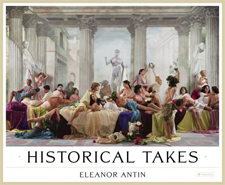
eleanor antin, “historical takes”

eleanor antin, "historical takes"Eleanor Antin
Historical Takes
(Prestel, 2008)


I first ran into Eleanor Antin’s work in the Pompidou a few years ago; they were showing an edition of her 100 Boots, which immediately clicked with me: conceptual art that was immediately funny but not stupid, a tricky area to work. She’s someone who pops up in New York with some regularity: Carving was part of the “Wack! Art and the Feminist Revolution” show at PS1; her video of herself as The King was at MoMA. I found this book on winter sale in the gift shop at MoMA as well, where I was hoping to find postcards from the Bauhaus show; it’s a catalogue of a show at San Diego Museum of Art a few years back of her stagings (not quite restagings) of classical scenes in the foothills of Southern California. (I don’t know if Francesco Vezzoli’s Caligula is likely to hold up as well as Antin’s The Death of Petronius (2007) as a representation of the last decade’s excesses.) There’s a good interview with her by Max Kozloff and a pair of contextualizing essays by Betti-Sue Hertz and Amelia G. Jones.

But mostly this book is about the photographs. They’re not quite as immediate as 100 Boots, as one can’t look at these photographs without knowing there’s a subtext that needs to be unpacked. Antin’s playing with representations of women, obviously; scenes of Roman decadence set in what’s obviously southern California carry a weight now that might not have been foreseen when the book was published, presumably the middle of 2008 when the exhibition started. Antin’s also engaging with digital manipulation: the frontispiece, Constructing Helen (from Helen’s Odyssey), 2007, shows men sculpting a body several times their size, the body of a woman made to look like she’s made of marble. Not all are as blatant in their manipulation of photographs, but how the conventions of art is clearly a major subject: models posed as they would be in an Alma-Tadema or Poussin look astonishingly fake. Animals prove endearingly unwilling to be posed.

The strongest sequence (and the most remarked upon in the book’s text) is Helen’s Odyssey, a recasting of her story. The centerpiece is two versions of Judgment of Paris (after Rubens): Paris chooses between a bandoliered Athena with an automatic rifle, a vamping Aphrodite, and a 1950s housewife Hera, all posed before a painted backdrop that wouldn’t be out of place in an Italian restaurant. Helen, at the margins of the painting, looks directly at the viewer; going back to Rubens, we find that she’s not there at all.

The King of Solana Beach makes a welcome but short appearance at the end of the book, as do photographs from Angel of Mercy and part of Recollections of My Life with Diaghilev 1919–1929 by Eleanora Antinova, an alter ego. They’re fantastic short narratives; one wishes for a collected edition of Antin’s work. I can’t find fault with this book, though; it’s beautifully produced, and being too short isn’t the worst crime. I’d love to see the actual photographs.

a list

Martha.     A list.

Maryas.     A list.

Marius.     A list.

Martha

Maryas.     A list.

Martha

Maryas.     A list lost.

Martha.     A list lost reminds her of a fire lost. Smoke is not black nor if you turn your back is a fire burned if you are near woods which abundantly supply wood.

Maryas.     A list lost does not account for the list which has been lost nor for the inequality of cushions shawls and awls. Nowadays we rarely mention awls and shawls and yet an awl is still used commercially and a shawl is still used is still used and also used commercially. Shawls it may be mentioned depend upon their variety. There is a great variety in calculation and in earning.

Marius.     A list.

Mabel.       A list.

Martha.     A list.

Martha.     There is great variety in the settlement of claims. We claim and you claim and I claim the same.

Martha.     A list.

Maryas.     And a list.

Mabel.       I have also had great pleasure from a capital letter.

Martha.     And forget her.

Maryas.     And respect him.

Marius.     And neglect them.

Mabel.       And they collect them as lilies of the valley in this country.

Martha.     A list.

(Gertrude Stein, from “A List,” p. 401 in Ulla Dydo’s A Stein Reader. Cited in William Gass’s “I’ve Got a Little List”.)

my year in books, 2009

(alphabetized by author)

Fiction

  • Jessica Abel, La Perdida
  • Marcel Allain & Pierre Souvestre, Fantômas (trans. unknown)
  • Chloe Aridjis, Book of Clouds
  • Paul Auster, City of Glass (adaptation by Paul Karasik & David Mazzucchelli)
  • Donald Barthelme & Seymour Chwast, Sam’s Bar: An American Landscape
  • Roberto Bolaño, Amulet (trans. Chris Andrews)
  • Jane Bowles, Two Serious Ladies
  • Jane Bowles, My Sister’s Hand in Mine: The Collected Works of Jane Bowles
  • Dino Buzzati, The Siren: A Selection from Dino Buzzati (trans. Lawrence Venuti)
  • Dino Buzzati, Poem Strip, Including an Explanation of the Afterlife
  • Julio Cortázar, 62: A Model Kit (trans. Gregory Rabassa)
  • Julio Cortázar, We Love Glenda So Much, and Other Tales (trans. Gregory Rabassa)
  • Julio Cortázar, All Fires the Fire (trans. Suzanne Jill Levine)
  • Stanley Crawford, Gascoyne
  • Stanley Crawford, Travel Notes (from here—to there)
  • Stanley Crawford, Log of the S. S. The Mrs. Unguentine
  • Stanley Crawford, Some Instructions to My Wife Concerning the Upkeep of the House and Marriage and to my Son and Daughter Concerning the Conduct of their Childhood
  • John Crowley, Love & Sleep
  • John Crowley, Dæmonomania
  • John Crowley, Endless Things
  • John Crowley, Novelties & Souvenirs
  • R. Crumb, The Book of Genesis Illustrated
  • Robertson Davies, Fifth Business
  • Robertson Davies, The Manticore
  • Robertson Davies, World of Wonders
  • Gideon Defoe, The Pirates! in an Adventure with Communists
  • Samuel R. Delany, The Fall of the Towers
  • Samuel R. Delany, Equinox
  • Samuel R. Delany, Hogg
  • Thomas M. Disch, 334
  • Alfred Döblin, Berlin Alexanderplatz (trans. Eugene Jolas)
  • Geoff Dyer, Jeff in Venice, Death in Varanasi
  • Dave Eggers, How the Water Feels to the Fishes
  • Stanley Elkin, Criers and Kibitzers, Kibitzers and Criers
  • Stanley Elkin, The Dick Gibson Show
  • Stanley Elkin, A Bad Man
  • Stanley Elkin, The Franchiser
  • Stanley Elkin, The Magic Kingdom
  • Brian Evenson, The Open Curtain
  • Brian Evenson, Last Days
  • Brian Evenson, Fugue State: Stories
  • Ronald Firbank, The New Rythum and Other Pieces
  • F. Scott Fitzgerald, Tales of the Jazz Age
  • F. Scott Fitzgerald, This Side of Paradise
  • Max Frisch, I’m Not Stiller (trans. Michael Bullock)
  • Carlos Fuentes, Where the Air Is Clear (trans. Sam Hileman)
  • Kenneth Gangemi, Corroboree
  • Kenneth Gangemi, The Interceptor Pilot
  • Henry Green, Blindness
  • Henry Green, Living
  • Henry Green, Loving
  • Henry Green, Party Going
  • Garth Risk Hallberg, A Field Guide to the North American Family
  • Tove Jansson, Moomin: The Complete Tove Jansson Comic Strip, Book 4
  • Gabriel Josipovici, Everything Passes
  • Franz Kafka, Amerika: The Missing Person (trans. Mark Harman)
  • Robert Kelly, Cities
  • Heinrich von Kleist, The Marquise of O— (trans. Richard Stokes)
  • Eric Kraft, Flying Home
  • D. H. Lawrence, The Plumed Serpent
  • Stephen Leacock, Nonsense Novels
  • Ursula Le Guin, The Word for World Is Forest
  • John Ajvide Lindqvist, Let the Right One In (trans. Ebba Segerberg)
  • Gary Lutz, Partial List of People to Bleach
  • Genevieve Manceron, The Deadlier Sex (trans. Jonas Berry & Lawrence G. Blochman)
  • Giorgio Manganelli, Centuria: 100 Ouroboric Novels (trans. Henry Martin)
  • Sarah Manguso, Hard to Admit and Harder to Escape
  • Micheline Aharonian Marcom, The Mirror in the Well
  • David Mazzucchelli, Asterios Polyp
  • James McCourt, Now Voyagers: The Night Sea Journey
  • Joseph McElroy, Ancient History: A Paraphase
  • Herman Melville, ; or The Whale (ed. Damion Searls)
  • Joe Meno, The Boy Detective Fails
  • Stephenie Meyer, Twilight
  • Alberto Moravia, Journey to Rome (trans. Tim Parks)
  • Vítězslav Nezval, Valerie and Her Week of Wonders (trans. David Short)
  • Amélie Nothomb, Tokyo Fiancée (trans. Alison Anderson)
  • Toby Olson, The Blond Box
  • Georges Perec, Life a User’s Manual
  • Georges Perec, 53 Days (ed. Harry Mathews & Jacques Roubaud, trans. David Bellows)
  • Georges Perec (et al.), Winter Journeys
  • Georges Perec with Harry Mathews, Cantatrix Sopranica L.: Scientific Papers
  • Thomas Love Peacock, Nightmare Abbey
  • Thomas Love Peacock, Crotchet Castle
  • Walker Percy, The Moviegoer
  • Aaron Petrovich, The Session
  • Charles Portis, The Dog of the South
  • Anthony Powell, A Dance to the Music of Time: A Question of Upbringing
  • Anthony Powell, A Dance to the Music of Time: A Buyer’s Market
  • Anthony Powell, A Dance to the Music of Time: The Acceptance World
  • Marcel Proust, The Lemoine Affair (trans. Charlotte Mandell)
  • Ann Quin, Berg
  • Jean Ricardou, Place Names: A Brief Guide to Travels in the Book (trans. Jordan Stump)
  • Juan Rulfo, Pedro Páramo (trans. Margaret Sayers Peden)
  • Damion Searls, What We Were Doing and Where We Were Going
  • Richard Sennett, The Craftsman
  • Leanne Shapton, Important Artifacts and Personal Property from the Collection of Lenore Doolan and Harold Morris, Including Books, Street Fashion, and Jewelry
  • Dash Shaw, Bottomless Bellybutton
  • Sophocles, Oedipus Rex (trans. Robert Fitzgerald & Dudley Fitts)
  • Sophocles, Oedipus at Colonus (trans. Robert Fitzgerald)
  • Sophocles, Antigone (trans. Robert Fitzgerald & Dudley Fitts)
  • Adalbert Stifter, Rock Crystal (trans. Elizabeth Mayer & Marianne Moore)
  • Jean-Philippe Toussaint, Camera (trans. Matthew B. Smith)
  • Wells Tower, Everything Ravaged, Everything Burned
  • Deb Olin Unferth, Minor Robberies
  • Eloy Urroz, The Obstacles (trans. Ezra Fitz)
  • Noël Vexin, Murder in Montmartre (trans. Jonas Berry & Lawrence G. Blochman)
  • Robert Walser, The Tanners (trans. Susan Bernofsky)
  • Edmund White, The Beautiful Room Is Empty
  • Edmund White, The Farewell Symphony
  • Edmund White, Fanny: A Fiction
  • Gene Wolfe, The Shadow of the Torturer
  • Gene Wolfe, The Claw of the Conciliator
  • Gene Wolfe, The Sword of the Lictor
  • Gene Wolfe, The Citadel of the Autarch
  • Gene Wolfe, The Urth of the New Sun
  • Stephen Wright, M31: A Family Romance
  • Unica Zürn, Dark Spring (trans. Caroline Rupprecht)
  • Job (NRSV)

Poetry

  • John Ashbery, Rivers and Mountains
  • John Ashbery, Some Trees
  • John Ashbery, The Tennis Court Oath
  • John Ashbery, The Double Dream of Spring
  • John Ashbery, Houseboat Days
  • John Ashbery, Shadow Train
  • John Ashbery, Self-Portrait in a Convex Mirror
  • John Ashbery, A Wave
  • John Ashbery, And the Stars Were Shining
  • John Ashbery, Three Poems
  • bpNichol, The Alphabet Game: a bpNichol reader (ed. Darren Wershler-Henry & Lori Emerson)
  • Clark Coolidge, Odes of Roba
  • Robert Creeley, Words
  • Paul Fattaruso, Bicycle
  • Heather Green, No Omen
  • Ernest Hilbert, Aim Your Arrows at the Sun
  • Dick Higgins, Legends & Fishnets
  • Susan Howe, Poems Found in a Pioneer Museum
  • Jennifer Kronovet, Awayward
  • Tan Lin, Ambience is a Novel with a Logo
  • Tan Lin, plagiarism/outsource / , Notes Towards the Definition of Culture / ,Untilted Heath Ledger Project / , a history of the search engine / ,disco OS
  • Harry Mathews, Out of Bounds
  • Paul McDonough & Jane McGriff, editors, Glitch 1
  • Paul McDonough & Jane McGriff, editors, Glitch 2
  • Paul McDonough & Jane McGriff, editors, Glitch 3
  • Paul McDonough & Jane McGriff, editors, Glitch 4/5
  • Paul Metcalf, The Assassination
  • Paul Metcalf, U.S. Dept. of the Interior
  • Paul Metcalf, Mountaineers Are Always Free
  • Paul Metcalf, Araminta and the Coyotes
  • Paul Metcalf, Merrill Cove
  • Chrisopher Middleton, Torse 3: poems 1949–1961
  • Paul Muldoon, Madoc: A Mystery
  • Fernando Pessoa, The Surprise of Being: Twenty-Five Poems (trans. James Greene & Clara de Azevado Mafra)
  • Fernando Pessoa, The Keeper of Sheep (trans. Edwin Honig & Susan M. Brown)
  • Ezra Pound, The Pisan Cantos (ed. Richard Sieburth)
  • Samuel Putnam, Paris Was Our Mistress
  • Pierre Reverdy, Selected Poems (trans. Mary Ann Caws, Patricia Terry & John Ashbery)
  • Jacques Roubaud, Some Thing Black (trans. Rosmarie Waldrop)
  • Jacques Roubaud, The Form of the City Changes Faster, Alas, than the Human Heart (trans. Keith Waldrop & Rosmarie Waldrop)
  • Aram Saroyan, Complete Minimal Poems
  • Bruno Schulz, Letters and Drawings of Bruno Schulz (trans. Walter Arndt & Victoria Nelson)
  • James Schuyler, ed., Locus Solus, issue I 
  • Gertrude Stein, Gertrude Stein on Picasso (ed. Edward Burns)
  • Mark Strand, Selected Poems
  • Stacy Szymaszek, Emptied of All Ships
  • James Tate, Selected Poems
  • Dara Wier, Remnants of Hanna
  • Charles Wright, Chickamauga

Non-fiction

  • Donald Antrim, The Afterlife: a memoir
  • Helen Moore Barthelme, Donald Barthelme: The Genesis of a Cool Sound
  • Gianfranco Baruchello & Henry Martin, How to Imagine: A Narrative on Art and Agriculture
  • Sybille Bedford, A Visit to Don Otavio: A Traveller’s Tale from Mexico
  • Sven Birkerts, An Artificial Wilderness: Essays on Twentieth-Century Literature
  • Grégoire Bouillier, Report on Myself (trans. Bruce Benderson)
  • Aldo Buzzi, The Perfect Egg, and Other Secrets (trans. Guido Waldman)
  • Nick Caistor, Mexico City: A Cultural and Literary Companion
  • Tony Cohan, Mexican Days: Journeys into the Heart of Mexico
  • Julio Cortázar, Around the Day in Eighty Worlds (trans. Thomas Christensen)
  • Julio Cortázar & Carol Dunham, Autonauts of the Cosmoroute (trans. Anne McLean)
  • Malcolm Cowley, Exile’s Return: A Literary Odyssey of the 1920s
  • Stanley Crawford, A Garlic Testament: Seasons on a Small New Mexico Garlic Farm
  • Simon Critchley, The Book of Dead Philosophers
  • Tracy Daugherty, Hiding Man: A Biography of Donald Barthelme
  • Thomas M. Disch, The Castle of Indolence: On Poetry, Poets, and Poetasters
  • Thomas M. Disch, The Dreams Our Stuff Is Made Of: How Science Fiction Conquered the World
  • Thomas M. Disch, On SF
  • Apostolos Doxiadis & Christos H. Papadimitriou, Logicomix: An Epic Search for Truth
  • Martin Duberman, Black Mountain: An Exploration in Community
  • Marcel Duchamp, Manual of Instructions: Étant donnés: 1° la chute d’eau, 2° le gaz d’éclairage . . . (ed. Anne d’Harnoncourt & Michael R. Taylor)
  • Max Frisch, Sketchbook 1966–1971, trans. Geoffrey Skelton
  • Kenneth Gangemi, The Volcanoes from Puebla
  • William H. Gass, Finding a Form
  • Josh Glenn, ed., Hermenaut 15: Fake Authenticity
  • Henry Green, Pack My Bag: A Self-Portrait
  • Hannah B. Higgins, The Grid Book
  • Eva Huttenlauch, Nicolaus Schafhausen & Monika Szewczyk, eds., Sung Hwan Kim: Source Book 6
  • Lewis Hyde, The Gift: Creativity and the Artist in the Modern World
  • Dorothy Kosinski, Dialogues: Duchamp, Cornell, Johns, Rauschenberg
  • John Krakauer, Under the Banner of Heaven: a Story of Violent Faith
  • Damon Krukowski & Naomi Yang, Album Exact Change: 20 Years of Publishing
  • D. H. Lawrence, Mornings in Mexico
  • D. H. Lawrence, Etruscan Places
  • David Lida, First Stop in the New World: Mexico City, the Capital of the 21st Century
  • Paul Maliszewski, Fakers: hoaxers, con artists, counterfeiters, and other great pretenders 
  • André Malraux, Museum Without Walls (trans. Stuart Gilbert & Francis Price) 
  • Sarah Manguso, The Two Kinds of Decay
  • Robert McAlmon & Kay Boyle, Being Geniuses Together
  • Tom McArthur, Worlds of Reference: lexicography, learning and language from the clay tablet to the computer
  • Christien Meindertsma, Pig 05049
  • W. J. T. Mitchell, What Do Pictures Want? The Lives and Loves of Images
  • Howard Moss, The Magic Lantern of Marcel Proust
  • Ted Nelson, Geeks Bearing Gifts: How the Computer World Got This Way
  • Francis M. Naumann, Bradley Bailey & Jennifer Shahade, Marcel Duchamp: The Art of Chess
  • Margarita de Orellana, ed., Five Keys to the Secret World of Remedios Varo
  • Octavio Paz, The Labyrinth of Solitude, trans. Lysander Kemp
  • Georges Perec, Thoughts of Sorts (trans. David Bellos)
  • Pliny the Elder (Gaius Plinius Secundus), Natural History: a selection (ed. & trans. John F. Healy)
  • Procopius, The Secret History, trans. G. A. Williamson
  • Herbert Read, The Green Child
  • Erik Anderson Reece, A Balance of Quinces: The Paintings and Drawings of Guy Davenport
  • João Ribas, ed., Unica Zürn: Dark Spring
  • Jacques Roubaud, The Great Fire of London (trans. Dominic Di Bernardi)
  • John Ruskin, Præterita (and Dilecta)
  • Damion Searls, Everything You Say Is True
  • David Shields, Enough About You: Notes Toward the New Autobiography
  • Francis Steegmuller, trans. & ed., Flaubert in Egypt: A Sensibility on Tour
  • Yoshihiro Tatsumi, A Drifting Life (trans. Taro Nettleton)
  • Fanny Trollope, Domestic Manners of the Americans
  • Paul West, My Father’s War: A Memoir
  • Edmund White, City Boy: My Life in New York During the 1960s and ’70s
  • Slavoj Žižek, The Puppet and the Dwarf: The Perverse Core of Christianity
  • Paper Monument, eds., I Like Your Work: Art and Etiquette