la musica ideal

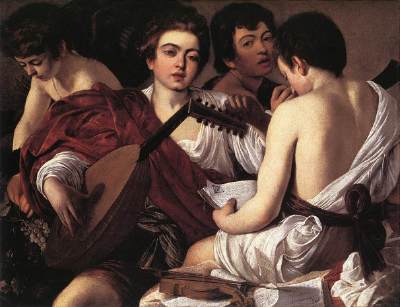
caravaggio, _the musicians_ thumbnail

“In La Musica Ideal (known in the English-speaking world as ‘The Musicians,’ not a translation but, then, the titles were not always given by Caravaggio), what is the young man at the left doing? Why isn’t he playing an instrument? Does he provide the musicians with an audience?”

(Dick Higgins, “The Importance of Caravaggio”, in Modernism Since Postmodernism: essays on intermedia, p.152)

noted: proust, quotation marks

There’s a nice post at The Valve which nicely gets at how deeply weird Proust gets w/r/t jealousy towards the end of the book.

And a nice post at pas au-delà on the connotations of punctuation. There’s a fine discursion on this (more precisely, what it means to emphasize things in the German style, by increasing letterspace in the emphasized word) towards the end of Agamben’s The Time That Remains. And there was another one recently about dashes – where was that?

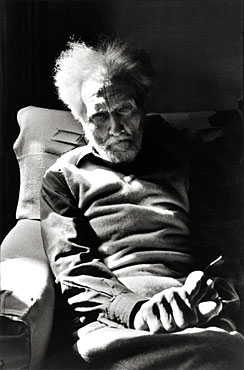
cartier-bresson’s photo of ezra pound

More precisely, a bad reproduction of it:

ezra pound, photo by henri cartier-bresson

There’s a much better reproduction of this in the print edition of this NY Times review of the show at the Cartier-Bresson Foundation, but it’s not on the web. I like this one because it looks like it’s been through too many Photoshop filters.

This part of the Times article is misleading at best:

What Pound felt is impossible to know. Years earlier, he had been interned for mental illness, and in 1960, he lapsed into long periods of depressive silence and stopped writing. And yet, in the image selected by Cartier-Bresson, Pound’s wild hair, burning eyes and tense hands seem to speak volumes about an old man raging against the dying of the light.

a cartography of working: part 4

(being where I have worked in New York)

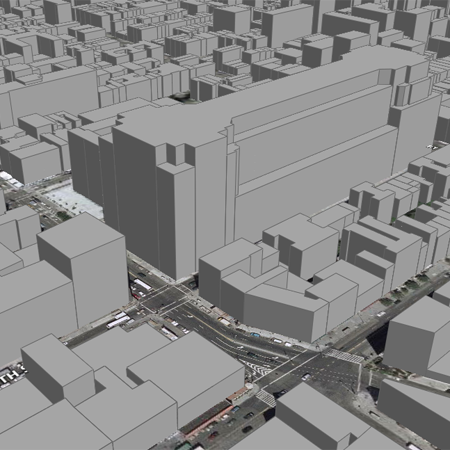
old port authority building

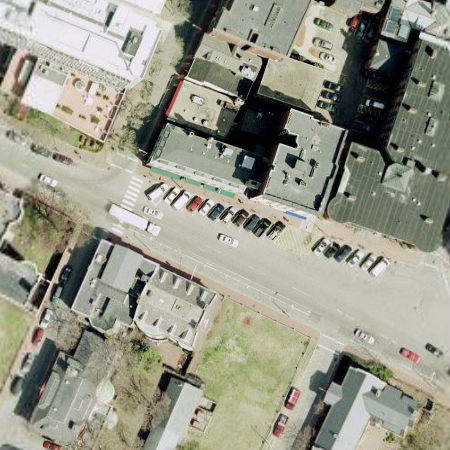
This is the first Sparknotes office. It’s the old Port Authority building between 8th and 9th Avenues and 15th and 16th Streets. In this image, we’re looking towards the southwest corner, 15th Street & 9th Avenue. It was a massive building; we were on the 8th floor which extended over most of the block. It turns out Google Earth lets you see buildings in some parts of New York, so here are some buildings. Curious that it looks like two cathedrals laid narthex to narthex. I was working in the one that pointed the wrong direction.

120 5th avenue

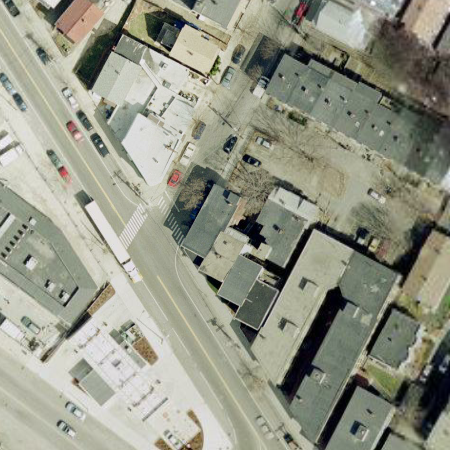
Here’s the second Sparknotes office that I worked in, at 120 5th Avenue, in a building beset by the Gap all around. The avenue seems to have the roof in it – Google hasn’t perfected everything yet.

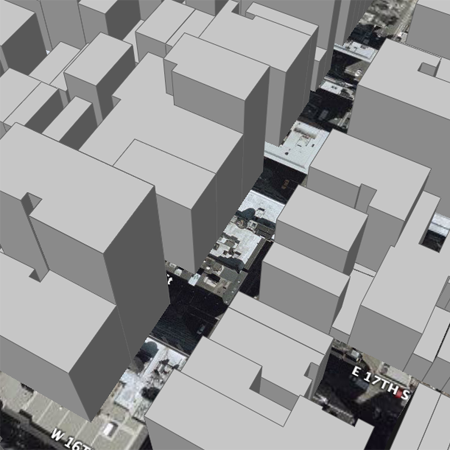
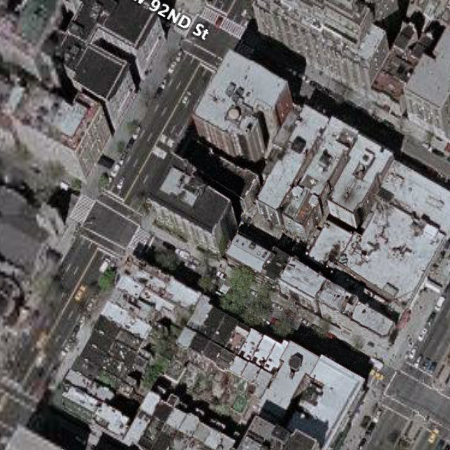
west 91st street

Here is the first office of the Institute for the Future of the Book, Ashton’s old apartment at 91st Street & West End Avenue. I like how West 91st Street gives the impression of being a park from above. It turns out that Google Earth has no buildings for this part of Manhattan (or, for that matter, anywhere else that I’ve worked): are only commercial buildings really buildings?

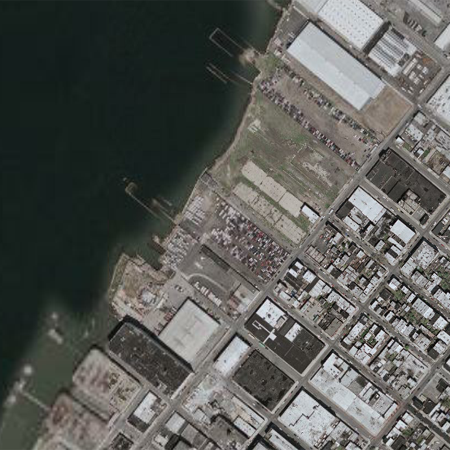
north 7th street

And here, zoomed out to show the river, is the current office of the Institute, on North 7th Street in Williamsburg.

New York is so gray in these maps. That wasn’t intentional.

a cartography of working: part 2

(being places where I worked in Cambridge & Somerville)

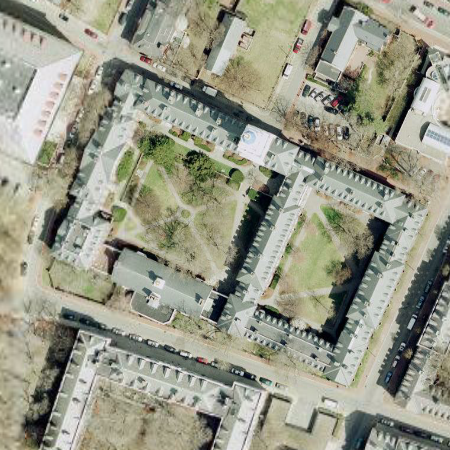
lowell house

Here is Lowell House, which I cleaned as part of dorm crew. I cleaned other houses at various points, but Lowell’s the first one I cleaned, I think.

the lg office

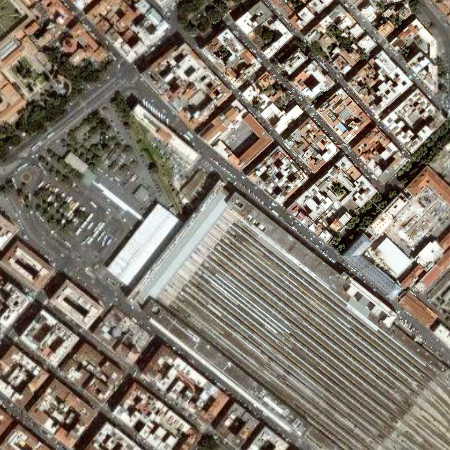
Here is the Let’s Go office (just north of Lowell House) where I worked for two summers as well as a good amount of other time during the school year. There was another summer spent working for Let’s Go in Rome, but that more properly belongs in a cartography of habitations.

cognoscenti

Here is the first Cognoscenti office, just north of Cambridge in Somerville. Later it moved much farther north into Winter Hill, but I don’t know precisely where that was. Here I drew maps and did other things. I later worked for Cognoscenti in Rome, but I don’t know if that counts.

a cartography of working: part 1

(being places where I worked in Illinois)

corn fields, somewhere in illinois

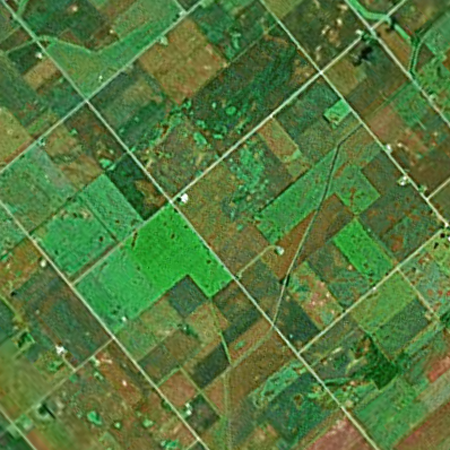
This is imprecise, because I don’t remember which cornfields I actually worked in as a detassler. But all cornfields look the same from above, which is presumably why Google doesn’t dignify them with high-resolution photos.

the burpee museum

Here is the Burpee Museum of Natural History, where I was a reptile keeper and did various other things in my youth.

cliffbreakers

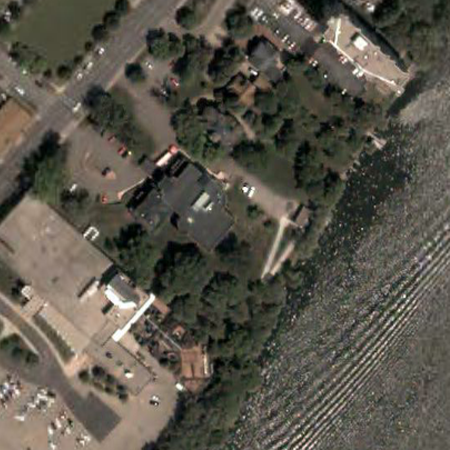
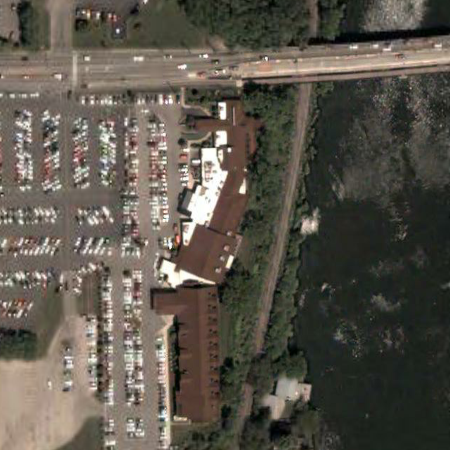
Here, farther north on the same river, is Cliffbreakers, a restaurant where I was a banquet server/busboy. It didn’t have the hotel attached to the southern end when I worked there.

nero/frogs

“From which I later concluded that if there is one thing as noisy as suffering it is pleasure, especially when there is added to it – failing the fear of having children, which could not be the case here, in spite of the far-from-convincing example in the Golden Legend – an immediate concern with cleanliness.”

(Proust, Sodom and Gomorrah, trans. John Sturrock, p.11)

*  *  *  *  *

“Then said he, ‘Make me with child, and after to be delivered, that I may know what pain my mother suffered.’ Which by craft they gave to him a young frog to drink, and grew in his belly, and then he said, ‘But unless ye make me to be delivered I shall slay you all.’ And so they gave him such a drink that he had a vomit and cast out the frog, and bare him on hand that because that he abode not his time it was misshapen, which yet he made to be kept.

Then for his pleasure he set Rome afire, which burned seven days and seven nights, and was in a high tower and enjoyed him to see so great a flame of fire, and sang merrily.

He slew the senators of Rome to see what sorrow and lamentation their wives would make.

He wedded a man for his wife. He fished with nets of gold thread, and the garment that he had worn one day he would never wear it nor see it after.

Then the Romans seeing his woodness, assailed him and pursued him unto without the city, and when he saw he might not escape them, he took a stake and sharped it with his teeth, and therewith stuck himself through the body and so slew himself. In another place it is read that he was devoured of wolves. Then the Romans returned and found the frog, and threw it out of the city and there burnt it.”

(The Golden Legend, the life of Saint Peter)

*  *  *  *  *

“Many writers allude to it in Naaman’s case; that Constantine the head of the whole earth had leprosy no one mentioned; at least none of his fellow citizens, but perhaps some foreigner or other, to be given no more credence than that other fellow who wrote about wasps building their nest in Vespasian’s nostrils, and about the frog taken from Nero at birth, whence they say the place was called the Lateran, for the frog (rana) is concealed (latere) there in its grave. Such stuff neither the wasps themselves, nor frogs, if they could speak, would have uttered! [I pass over the statement that boys’ blood is a remedy for leprosy, which medical science does not admit;] unless they attribute this to the Capitoline gods, as though they were wont to talk and had ordered this to be done!”

Lorenzo Valla, Discourse on the Forgery of the Alleged Donation of Constantine, trans. Christopher B. Coleman, pp.153–155)

<

p align=”center”>        *
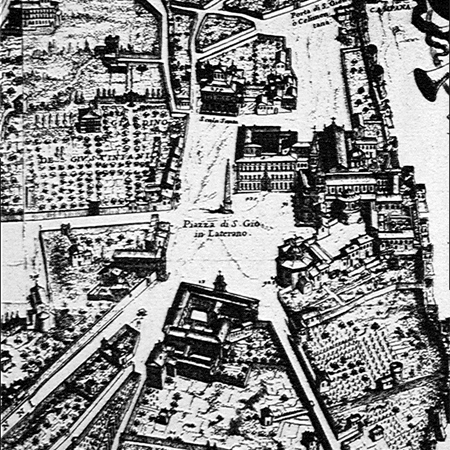
pianta di roma di g. b. falda

(G. B. Falda, Pianta di Roma (detail), 1676)

*  *  *  *  *
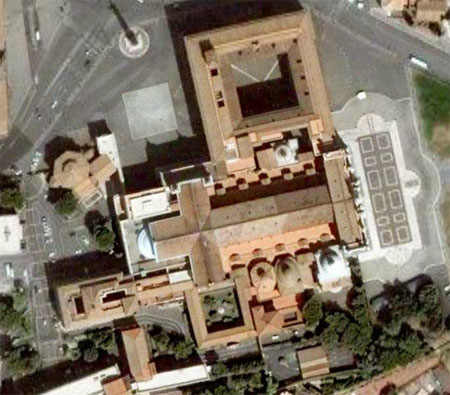
google earth view of san giovanni in laterano

(Google Earth of the same)