september 1–september 10

Books

Films

  • Conte d’hiver (A Winter’s Tale), directed by Éric Rohmer
  • Guernica, dir. Robert Hessens & Alain Resnais
  • The Cameraman, dir. Edward Sedgwick
  • The Docks of New York, dir. Josef von Sternberg
  • Design for Living, dir. Ernst Lubitsch
  • Disco Dancer, dir. Babbar Subhash
  • The American, dir. Anton Corbijn
  • Free and Easy, dir. Edward Sedgwick

Exhibits

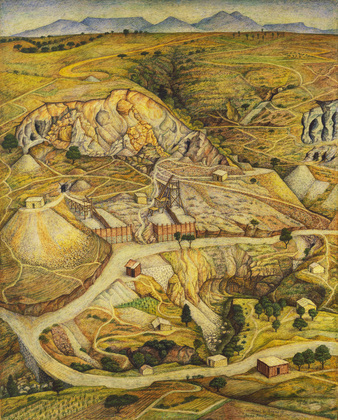
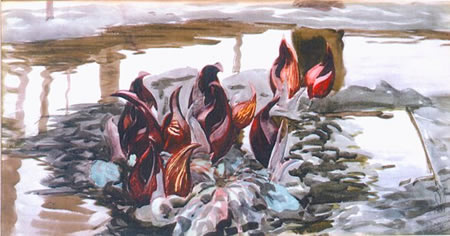
  • “Charles Burchfield: Fifty Years as a Painter,” D. C. Moore Gallery
  • “Toledo/Borges: Fantastic Zoology,” Instituto Cervantes
  • “Lee Bontecou: All Freedom in Every Sense,” MoMA

kristin hersh, “rat girl”

Kristin Hersh
Rat Girl: A Memoir
(Penguin, 2010)


The first time I would have heard Kristin Hersh’s music would have been sitting in a station wagon in a dark parking lot somewhere in rural Illinois waiting to pick someone up. Occasionally in the car you could pick up the modern rock stations from Chicago, and what they played was more interesting that the omnipresent classic rock stations, with their monotonous diet of Led Zeppelin, Pink Floyd, Bad Company, Rush, occasionally mixed in with whatever new music might be masculine enough to fit in (Candlebox, maybe Pearl Jam). NPR was occasionally interesting, but not predictable; all in all, it was a frustrating state to be in when it was clear from whatever media did seep in that things were happening elsewhere, happening without you. It’s a state that wouldn’t exist a year later, when I went east to college & the Internet came along; but that’s how things were in 1994, near the end of something though I didn’t know it at the time. That was the environment in which I first heard Throwing Muses’ “Bright Yellow Gun,” the single off University: the song and then the record sounded like a transmission from another world. Faux-surrealism was stock in trade for rock lyrics at that point in time; but Kristin Hersh sounded more like she meant it than most: there was an awkwardness that wasn’t contrived, and the imagery couldn’t easily be resolved into standard adolescent concerns: something else seemed like it was happening.

Early artistic impressions can be hard to shake off; most of what one accords value when young is embarrassing in hindsight, especially when growing up in an environment of cultural deprivation. Throwing Muses were, as it turned out, one of the first bands I saw after arriving at college, a free show on the Esplanade in Boston in front of a crowd of drunken fratboys who clearly didn’t like them, validation in my eyes. It was easy, around that time if you were a certain sort of young person concerned with pop music, to get bogged down in Baudrillard and interminable arguments about fake authenticity; but Throwing Muses seemed to somehow be outside that argument. 

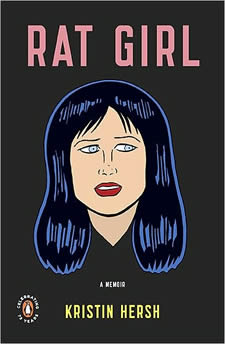
Writing about pop music is almost invariably awful, and this is only intended as background to my reading of this book. I don’t love memoirs; it’s a form that too often lends itself bad writing because of too easy recourse to the truth: the truth about most people’s lives is not art, even if it may be diverting. The rock memoir promises to be the worst of all possible books. But there are exceptions; and this might be one of them. Rat Girl is a memoir of Hersh’s 18th year, when her band was playing regularly in Providence and Boston, when she was ostensibly attending college, when she was diagnosed as being bipolar, when her band was signed to a British record label and recorded its first album, and when she unexpectedly wound up pregnant. What I like here is how much is left unexplained: the overtly Freudian title, an epithet that Hersh uses to describe herself throughout the book; how the members of the band appear to be living as homeless while Hersh seems to maintain a reasonably close relationship with her parents; how she came to be friends with Betty Hutton; how she came to have a baby in the first place. All the obvious questions that a journalist would like answered about Hersh’s early life are entirely disregarded in this book.

What remains is a record of experience; a note at the front explains that it’s based on a diary of the year, but nothing of that diary remains, and it’s difficult to imagine what might be in it. Hersh and her band seem to live like savages or baby rabbits, crashing in abandoned apartments, falling asleep whenever they stop moving, using a language that seems to be their own. There’s a strangeness here that can’t quite be classified. A sequence early in the book between Hersh and her drummer, who’s just brought in some trash to use as percussion:

Sitting up to admire his garbage, I notice that he’s wearing a coat. I’m stunned. “Dave . . . what the hell?”
     Dave and I always believed that coats were for wimps who couldn’t handle seasons: “coat slaves.” Geez, people, get a grip! Seasons happen! And that vision was for wusses: people who couldn’t hack the rough-hewn, fuzzy life we lived – slaves to their glasses – when we could play entire shows without seeing anything. It was the only thing we were smug about, really, our ability to live blind and cold.
     Then, a few months ago, he showed up at our attic practice space wearing glasses. I felt betrayed, but he was transformed. “Trees have individual leaves, even when they’re far away!” he insisted, his eyes and new lenses shining. (p. 62)

This isn’t the only point in this book where one thinks of Werner Herzog’s The Enigma of Kaspar Hauser. What’s most interesting is Hersh’s relationship with her songs: something that started, she says, when she briefly lived in an apartment she calls the Doghouse:

. . . by the time I raced out the door . . . it was too late. I was branded; tattooed all over with Doghouse songs – each one a musical picture etched into my skin.
     I know that when my band plays these ugly tattoos, people can see them all over me, but I don’t care too much. I mean, shy people are generally not show-offs, but the burning that the songs do, the fact that I’m compelled to play them, makes me think they . . . matter? Maybe that’s not the right word. That they’re vital. And I respect that. I can feel sorry for myself without judging the music. (p. 12)

This is also a memoir of mental illness: hit by a driver while on a bicycle when young, Hersh’s songwriting seems to be related to her bipolarity:

A few days later, lying in my hospital bed, I heard my first song: a metallic whining, like industrial noise, and a wash of ocean waves, layered with humming tones and wind chimes. Intermittent voices talked and sang. I thought it was the TV in the next room. The TV never shut up, though; nobody ever turned it off or even changed the channel. I started to worry that the patient next door had died or slipped into a coma. (p. 76)

Hersh doesn’t valorize her bipolarity as the source of her creativity; it’s simply something that’s there that has to be lived with, much the same attitude she has later when she discovers that she’s pregnant:

I really didn’t mind getting hit by a car, though – it was interesting, and probably my last chance to fly through the air in nonjudgmental fashion. I think if I got hit by a car now, it’d bug me, but before we learn to by whiny about our existence and how comfortable it isn’t, we’re still open to being thrown around, even if we bust our faces when we land. So what if sudden contact with the street makes your teeth fall out, maybe snaps off a foot or two? At least you know what that feels like. (p. 78)

There’s something very likable about this book: it’s not for everyone, and certainly my relation to it is going to be charged by personal experience. But it’s far more interesting than writing about music, than a memoir should be.
noted, self-promotion edition

  • A piece by Linton Weeks at NPR’s website contains part of an interview with me.
  • I have a piece in the latest issue of Logos, a Dutch book journal. They appear to be charging $35.00 (plus tax!) to read the article. Hint: this article isn’t worth paying anything for!
  • Also I have an essay in The Most Beautiful Swiss Books 2009. I don’t think this is online anywhere, but I might be wrong. 
  • Less self-promotion: somebody seems to have scanned Barbara O’Brien’s Operators and Things, one of those books that’s probably worth re-reading.

aram saroyan, “coffee coffee”

Aram Saroyan
Coffee Coffee
(Primary Information, 2009; originally 1967)


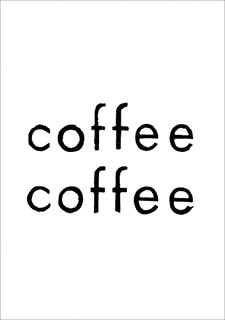
Coffee Coffee is a book of poetry consisting of 65 words – that is, if four occurrences of the syllable “ly” can be said to count as words and the two words of the title are discounted. It’s a small book, 40 leaves of paper; the versos are blank, and most rectos consist of a single centered word, though in some cases up to eight words appear, similarly centered.

There’s a rhythm that appears as one flips through this book, sounding out the words: generally three or four pages with a single word will be followed by a single page with four words: “hard / lookout / guarantee / oh / bird bird bird”. The three birds are stacked on top of each other: the reading speeds up after getting to them, especially after the slowness inherent in “oh”: looking at the word on the page, the reader slows down further: why does the word need an “h” to make a long “o” sound? Giving the words space to breathe makes all of them strange: “lookout,” for example, must be functioning as a noun, though given a single space it could become a command. The arrangement also bears scrutiny: hard seems more closely related to guarantee than it does to lookout; lookout, in turn, might be connected to bird bird bird.

The words function as signifiers as well as graphic shapes: early on, the reader encounters a page with four letters in two lines: “o r / o r”. The four letters form the corners of a square: a + of white space appears between them. We could read them as “or or”; we could almost as easily read them as “oo rr,” “oror,” or simply “o r o r”. What we’re looking at is four markings on a page: we give them meaning. Because previous pages have words on them (some multiple stacked words), we assume these should be two words as well. But it’s the act of reading that’s making them “or or”. 

Words existing on their own invite the reader to slow down and savor the sound: the “v”s that move through the final four words, “heavy / crying / velvet / favor”, the missing “v” in “crying” making the double “v” in “velvet” seem more luxuriant. Graphically, the words “sleep” and “sheer” aren’t very far apart; but they sound very different and bring out very different responses in the reader. In the middle of the book, a stacked “cigarette / cigarette / cigarette / cigarette” makes me think of Harry Mathew’s novel Cigarettes, where he points out that the sound of a train is almost exactly “cigarette, cigarette, cigarette”. 

The original version of this book was published as a stapled 8.5” x 11” book in 1967; it seems to have been created on a typewriter and then mimeographed. An excerpt from this book appeared in issue 2 of Vito Acconci and Bernadette Meyer’s 0 to 9; and a couple of these poems appear in the misleadingly titled Complete Minimal Poems that Ugly Duckling put out a few years ago. An online version of this book can be downloaded at the Eclipse archive; there you can find both a scan of the original edition as well as a reading copy, where the text has been reset, as is the case with the poems that appeared in the Ugly Duckling edition. 

Format is something that’s extremely important when dealing with visual poetry: a photograph of a piece of paper is not the same thing as a piece of paper, even though the words might be identical. Correspondingly, a great deal of care has been taken in the production of this book. There’s one major difference from the original edition: the size is much smaller, meaning that there’s less white space around the words. The text appears in text that appears to be typewritten; this isn’t hard to do on a computer, of course, but it appears to have actually been created with a typewriter. Looking closely at the page where “cigarette” appears four times, it becomes clear that these words are not actually identical in the way that a computer-generated page would tend to be: the loop of the “g” in each word is distinct. It appears that the original version was scanned into a computer, to be turned into a polymer plate for letterpress printing: moving one’s finger over the book, one feels the imprint of a printing press. There’s the temptation to think that impression is the impression of the author’s typewriter: but the original edition, mimeographed, would not have such an impression. 

It’s hard to get around thinking about aura with something like this. Sometimes looking at an old print of an old photograph – this happened to me most recently at the Muybridge show in Washington – one gets the feeling of continuity: of looking at what the photographer saw. Light reflected off the scene the photographer saw made a chemical impression on the film; that negative was chemically transformed, and when we look at it we see something that “saw” something that “saw” what’s being depicted in the photograph. This is an abstraction, of course; but it’s not quite as high-level an abstraction as the one involved in digital photography and reproduction, which we can never entirely get around. Because we’re enmeshed in the digital, earlier mechanical reproduction appears more real, more connected, even when it was deeply part of the technology of its day. But when we look at this, we think we can see the impress on the page made by Saroyan’s fingers. We do, sort of: maybe it’s possible to see where he would have hit the keys harder, leaving a darker impression, although presumably when making a copy for reproduction he sought to make the most normalized page possible. 

Reproduction thus becomes a tricky issue. Saroyan’s poetry straddles the fine line between text and the visual arts, as does all visual poetry; in Dick Higgins’s term, it’s an intermedium. We think of Saroyan as a poet rather than as a visual artist, and thus his poetry is read in books; however, Carl Andre, generally thought of as a sculptor, has similar typewriter poems displayed in vitrines at the Chinati Foundation in Marfa. Both presentation models might be seen as appropriate, though they have their drawbacks. An edition of Saroyan’s poems that deviates from his original presentation (even one that deviates as minimally as this one) loses something; but resetting the poems gets us away from the problem of venerating them as art objects. I like this edition: even though it’s well done, it’s cheap. A large part of the reason for visual poetry’s general lack of impact is the inaccessibility of the original works; it’s hard, for example, to find a copy of Emmett Williams’ and La Monte Young’s 1967 Anthology of Concrete Poetry for under $100, and I suspect that most of the copies that still exist are not being read. Primary Information is doing valuable work in making this available; I hope they continue to do similar work. 

august 23–august 31

Books

Films

  • Kiss Me Deadly, directed by Robert Aldrich
  • I soliti ignoti (Big Deal on Madonna Street), dir. Mario Monicelli
  • Killer of Sheep, dir. Charles Burnett
  • Several Friends, dir. Charles Burnett
  • The Horse, dir. Charles Burnett
  • When It Rains, dir. Charles Burnett
  • The Saphead, dir. Herbert Blaché & Winchell Smith
  • He Who Gets Slapped, dir. Victor Sjöström
  • Battling Butler, dir. Buster Keaton
  • Spite Marriage, dir. Edward Sedgwick & Buster Keaton
  • Trouble in Paradise, dir. Ernst Lubitsch
  • Cockfighter, dir. Monte Hellman
  • Rififi, dir. Jules Dassin
  • The Man Who Laughs, dir. Paul Leni
  • Dude, Where’s My Car?, dir. Danny Leiner

joseph mcelroy, “ship rock: a place”

Joseph McElroy
Ship Rock: A Place
(William B. Ewert, 1980)


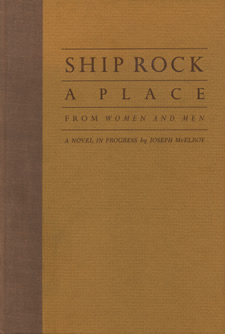
This short book has the subtitle “From Women and Men, a Novel in Progress”; it’s a section of that much larger book published on its own in 1987. This was a limited edition, beautifully printed by William B. Ewert, who ran a small press in New Hampshire that seems to have mostly published poetry. It’s a lovely book; used copies are still floating around. It’s nice reading McElroy like this: it’s easier to concentrate on the language, rather than trying to balance the myriad themes webbing through his larger books. McElroy’s prose needs to read (and re-read) slowly: it’s hard to do this with longer books.

This is a book concerned with places, as the title suggests, and names: in particular a place in New Mexico called Shiprock or Ship Rock, as it is spelled in this book. Ship Rock is both a town and a natural feature:

The Rock rises upwards of fifteen hundred feet right up off the plateau. Half again that long at its base on this south side, it still seems less massive than lofty, for it is alone. That’s what the local Navajos cal it – the Rock. Pretty much one rock (mono-lith) with craggy crops lifting toward two westward peaks with a massed steady shift against downward veins of long, vertical sharding and against the backward pull of what starts two-thirds of the way up, a slow climb beginning at the top of what looks like sheer cliff and climbing from there so that, notch by notch, the eye that is taken along these splits and levels takes his whole crazy body into what he’s witnessing, until something is an event. (p. 11)

There’s a hint of why “Ship Rock” is used instead of “Shiprock” in the bisection of “monolith” in to its components, later elaborated: “And he thought he heard a car from far off toward the town of Ship Rock (spelled as one word with a small r, he later noted” (p. 34). The protagonist has heard the words ship rock spoken; he hears them as two words, not concatenated into a single word. Shiprock is a name; Ship Rock is a name and two words, both of which can signal. One of those words is factual: Ship Rock is a rock, albeit a very large one. The other is metaphor: people look at Ship Rock and see a ship. Much of this book is an attempt to make sense of the rock’s dual nature. Plot is incidental to this book: the protagonist, who is unnamed and whose profession is left unclear, has traveled to Ship Rock and stops to consider it for a while. 

There’s more than an echo of Wallace Stevens (or perhaps A. R. Ammons) here; as this text appears here, it’s barely fiction as it’s usually construed, and one could almost make an argument that this might be better understood as an extended prose poem. Certainly there’s a deep concern with language and its rhythms. Here the protagonist considers the word “neck” as geologists use it – Ship Rock is a type of formation often called a “volcanic neck” – though the geologists’ usage doesn’t make intuitive sense because there’s no head attached to the neck:

But wait, a voice says, we mean neck in the sense of throat. It doesn’t have to have a head on its shoulders. But the truth is that the throat is long gone: the neck is what’s left, the neck that was inside the throat, if you see.
     The way the heart is inside the stomach at seven in the morning after a hard night. God, he recalls necks of land with plates of Little Neck clams on them, but not in the noise of last night. (p. 26)

The voice that starts this is inside his head: he’s thinking about language, and trying to understand it: we understand geologic processes – a volcanic event – in terms of the more familiar. Association leads to more association; finally he ends somewhere else entirely. Little Neck, New York, where the clams are from, might get its name from a peninsula that looks something like a neck: a peninsula seems more obviously like a neck than a volcanic mountain does. But the language here catches: the last sentence sprinkles its iambs with anapests and begs to be read aloud. In the interjection, there’s an echo of the sixteenth-century “Western wind, when will thou blow” (“Christ, if my love were in my arms”).

McElroy knows, of course, and his protagonist presumably does as well, that the Navajos, when they called Ship Rock “The Rock” wouldn’t have actually used those particular words: their own words would naturally have sounded different. Later in the book there’s mention made of an organization with the initials “D.N.A.”; those expand to “Dinebeiina Nahiilna Be Agaditah,” an actual Native American legal aid organization with an acronym that functions, intentionally or not, two ways. Coincidence is a driving force here; a place is one thing, a name is something else entirely. Proust mapped this territory first. 

An interview by Tom LeClair in Anything Can Happen: Interviews with Contemporary American Novelists (1983) has McElroy describing the writers that he was interested in while he was writing Women and Men, among them Alain Robbe-Grillet:

. . . God knows Robbe-Grillet can be pompous enough even in Jealousy, a fine book that represents I guess a desire that’s another side of me, to turn microscopic seeing into meditation – to be truthfully precise. But to what and through what? I’m sick of this dogma, a platitude supporting the virtue of concreteness without ever asking why concreteness, what philosophical conclusions does it rest on? (p. 239)

This might perfectly be describing what’s happening in Ship Rock. A rock, something as massive as Ship Rock, is nothing if not concrete: but understood geologically, it had to once be liquid to exist. References to Sandia Man, Cochise Man, the Pueblo Indians, the Navajos, dot the text; all of these groups inhabited (or inhabit) the area around Ship Rock: the rock would have appeared the same to them, but humanity exists on a tiny timeframe geologically. 

mcelroy on moral fiction

Great Expectations and Middlemarch can’t be done now. They don’t feel to me like the atmosphere I’m living in now. I’m with William Carlos Williams and Joyce and others; whatever I’m ‘saying’ I have to give the feeling of time now, the multiple disastrous world now, the world that came awfully and finally out of World War II. But Great Expectations and Middlemarch – they show people losing their true centers, going after money or status or displaced ideals, letting errors multiply, self-deception, self-punishment even. Great novels. I reread them. They move me. They add to me. I see how the whole thing works out (more maybe than any book can pretend to today) – but it is that whole process that adds to me, not an abstractable credo or assent. A novel isn’t a sermon or a moral program – excuse the truism. My step-grandfather, who came from Maine, thought the old copybook maxims were the way to teach you how to live. I thought about this, this conviction of his; but the fact that it was a conviction of his told me more than any of the actual maxims ever could.”

(Joseph McElroy, interview with Tom LeClair in Anything Can Happen: Interviews with Contemporary American Novelists (1983), p. 246.)

alan burns, “the angry brigade”

Alan Burns
The Angry Brigade: A Documentary Novel
(Quartet, 1974)


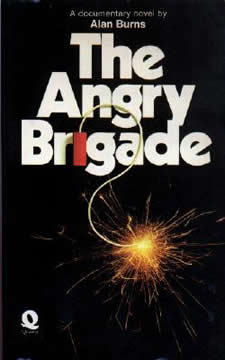
It’s hard to tell exactly what this is bereft of critical apparatus. The front cover gives this book the subtitle “A Documentary Novel”; the back cover explains that the author has used “a deft combination of serious in-depth research and imaginative reconstruction”. The seriousness of Burns’s credentials are played up: inhe is a “novelist, playwright and lawyer . . . . a barrister, [who] did research in politics at the London School of Economics, and since 1965 has been a full-time writer.” An unsourced epigraph facing page 1 declares that “The true story of the Angry Brigade will never be told until they publish their memoirs . . . if they ever do.” A short section entitled “Focus on the Angry Brigade” starts the book; signed “A.B.,” the ostensible author explains that he interviewed six people involved in the actual Angry Brigades, but on the condition of concealing their identities:

I therefore adopted the method of the ‘collective autobiography’, telling the story in the words of the participants, but without ‘naming names’. The collective nature of the book is appropriate to a movement whose members remain anonymous for ideological as well as legal reasons. . . . This book brings together the experiences of members of two activist communes. It tells how as individuals they became radicalized, how as groups they were organized, how they related to the world outside . . . . This book relates past events in the past tense, but similar groups and activities continue in various forms. The story is told naturally in different tones of voice and different accents. The reader will distinguish the various motives and attitudes of the speakers, and judge the quality of the men and women who took part in these events. (pp. 2–3)

The book that follows seems to be an oral history of the Angry Brigades in Britain in the early 1970s, told in first-person sections by “Barry,” “Dave,” “Jean,” “Ivor,” “Susanne,” and “Mehta.” Certainly in this country, the history of the Angry Brigades is almost entirely forgotten, if it was ever known in the first place; a tiny article in Wikipedia might provide background; more can be learned from the article on Anna Mendelssohn and a 2004 piece by David Edgar in the LRB. The Angry Brigade seem to have been overshadowed even in their own time by the more violent IRA. I wouldn’t claim to have any particular interest in or knowledge of the history of the Angry Brigades; I came across a mention of this book in Jonathan Coe’s biography of B. S. Johnson, which also notes that the Angry Brigades inspired Christie Malry’s Own Double Entry, one of Johnson’s more successful books. This particular book isn’t particularly easy to find, at least in this country; it doesn’t seem to have been reprinted after this paperback edition.

What remains is an odd document. I certainly can’t pin any historical figures to the names of the characters; this is a long way from being a roman à clef. The personal characteristics seem to have been studiously scrambled. I don’t think the voices are quite as indistinguishable as Burns’s contemporary Zulfikar Ghose found them – Dave’s voice, for example, can always be distinguished because he swears more than anyone else – but there is something very strange about this. Perhaps this is intentional on Burns’s part, an attempt to suggest that individual identities have been subsumed to the greater movement; or perhaps this is how the speakers wished to present themselves to Burns, if the interviews took place as suggested by the introduction. But there’s something interesting about this anonymity: it seems appropriate for a narrative of anarchism, and it’s very different from what we’re used to in histories of terrorism. 

The book takes a turn for the strange towards the end: one of the characters bombs the Post Office Tower (which actually happened in 1971; Wikipedia attributes this to the Provisional IRA) and a woman is killed. People have been injured by the Angry Brigade’s violence over the course of the book; but this death didn’t actually happen. The narrative is now firmly in the realm of fiction; this is enforced by the penultimate section of the book. Dave has been sent to jail; in this section, he counts off the 52 months and 25 days that he spends in jail:

I ticked off the days:
1ST YEAR
1st month
12 13 14 15 16 17 18 19 20 21 22 23 24 25 26 27 28 29 30 (p. 169)

There’s a similar entry for every month (all but the first and the last listing every day; the 17th of July is circled every year, his birthday); at the end, he’s released and takes the bus back to rejoin the Angry Brigade. It’s an odd list, taking up 7 pages: there’s not much that can be learned from it save that the 35th month has 29 days, and is thus a leap year, presumably either 1972 or 1976. If it’s 1972, he enters jail in 1969 and leaves in later 1973; if it’s 1976, he enters jail in 1973 and leaves in 1978. The book was originally published in 1973; historically, it would make most sense for him to enter jail in 1973, but something is clearly off. Jail passes in a blur; he is released into a militarized Britain, where the Angry Brigade’s struggle continues. Ivor has taken charge of things; the Angry Brigade seems to be leading a full-on rebellion against the British government. There’s a paragraph-long final section, narrated by Suzanne: she curtly tells how three bombs exploded in the basement of their headquarters while she and Ivor were sweeping it: in the final sentence of the book, she feels the shock wave of the bomb.

What’s going on here? The oddity of the end of the book doesn’t seem to be noticed either by Ghose’s piece on it nor by the other short review that I can find online, which treats it as a historical document. While the book may have started from interviews, as “A.B.” insists at the start of the book, there’s also an author of fiction at work here. Returning to the note at the beginning of the book:

Who then was responsible for the Post Office Tower bombing and those at Carr’s home, Bryant’s home in Birmingham, the army barracks in Albany Street, Chelsea Bridge early in September, and the Royal Tank Regiment HQ in Westminister? At least three have been claimed by the Angry Brigade. But it seems as if the bombings are the work of more than one group. In the words of the Special Branch’s ‘experts on the left’: ‘In calling it the Angry Brigade we’re chasing a myth because there is no one organization called the Angry Brigade. There is a theory that the Angry Brigade is a many-headed hydra.’ In other words the example set by the bombings of last year has been followed by independent political groups. In London alone there are thought to be three such groups. (p. 1)

A space has carefully been opened: “A.B.” (initials that Ghose notes also stand for “Angry Brigade”) is careful to not explicitly blame the Post Office Tower bombing on the Angry Brigade, an organization that he then denies exists as such. The Angry Brigade is as much an idea as it is a historical actor: as an idea, it can serve as part of fiction, a piece of fiction that ultimately becomes purely speculative.