In every stall in every bathroom in a museum or gallery (which may or may not be empty), install whiteboards (with markers attached with string) within easy reach of toilet.
Category Archives: projects
locus solus industries 004
Locus Solus Industries, a brave experiment in capitalist failure, presents LS004, which also marks the inauguration of Senza Press, a brave experiment in publishing failure. Available now from Lulu: an edition of Herman Melville’s Timoleon, etc.. Originally published in 1891, the year in which Melville died, Timoleon was Melville’s last published book. As far as I can tell, this is only the second edition of the book: Melville having completely given up on the American literary establishment at that point, it was originally published in an edition of 25 and received no attention from anyone.
Here is what the cover looks like:

Click here to go to Lulu to buy a copy for $5.81 (the cheapest you can do it at Lulu), or click here to download the full PDF (488kb) for free.
The print edition is 6″ x 9″ and 64 pages long; the PDF version includes the covers and is set up as spreads. I have not seen the print version and cannot vouch for its printing quality, but that’s what the Internet’s all about, isn’t it? As I typed the whole thing in (thanks for nothing, Project Gutenberg), it is almost certainly riddled with errors. But: if the errors are pointed out to me, I will happily correct them and make a new version.
locus solus industries 003
Despite the failure of our last product at the dread hand of copyright, Locus Solus Industries bravely marches ever onward. Here is Locus Solus 003:
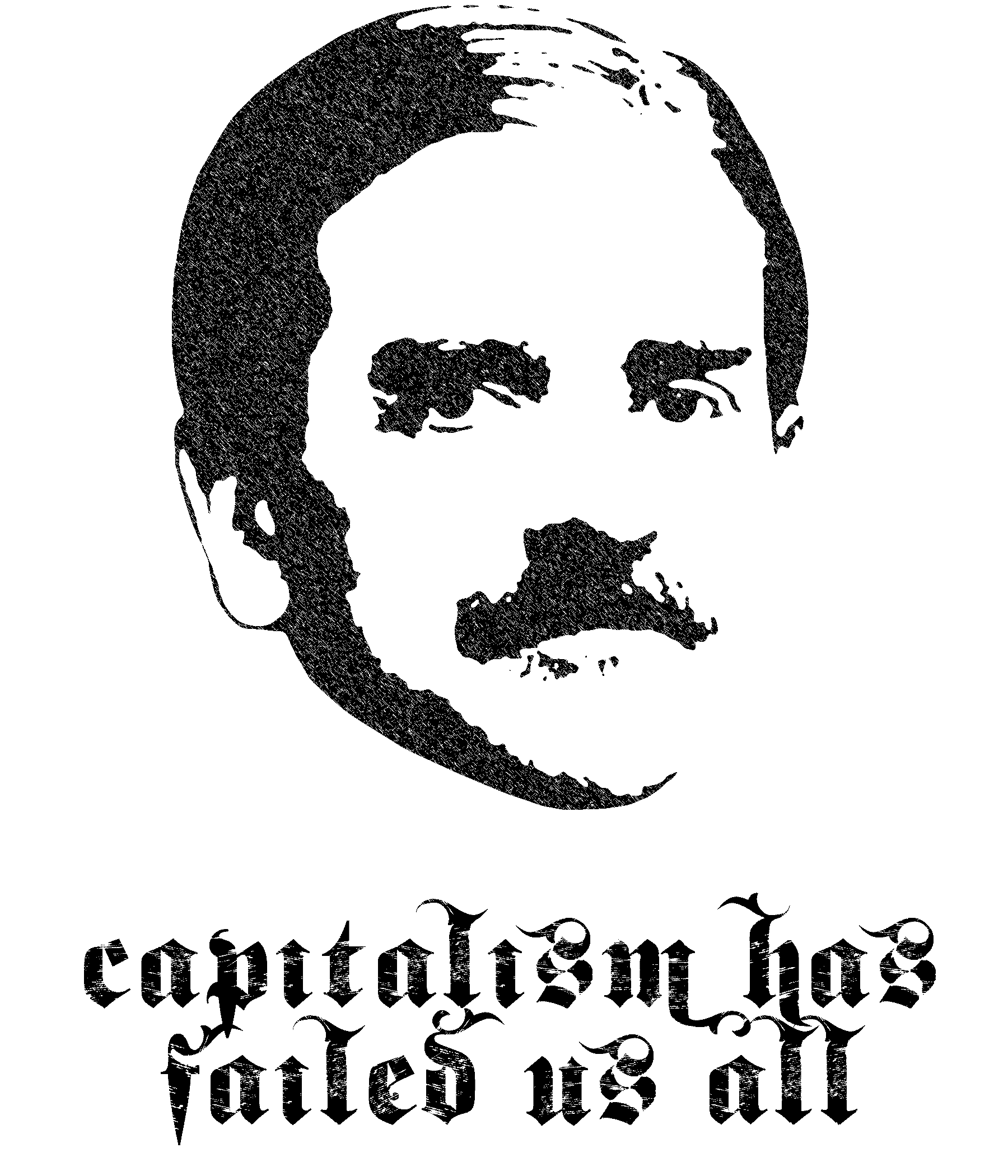
Mr. Roussel is, alas, safely dead, and hopefully no one will complain about this one. Also, you can click on that little picture and see a much bigger black-and-white graphic where you can admire the ligatures on the type.
locus solus industries 002
Locus Solus Industries continues apace. Here is our second t-shirt:
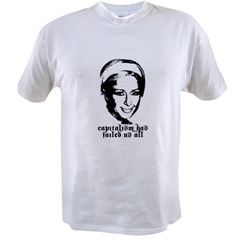
Also suitable for many occasions, perhaps even more than the last one.
But: alas. Say the good people at Cafepress:
Dear Shopkeeper,
Thank you for using CafePress.com!
As you may know, CafePress.com provides a service to a rich and vibrant community of international users. From time to time, we review the content in our shopkeepers accounts to confirm that the content being used in connection with the sale of products are in compliance with our policies, including our Content Usage Policy (CUP).
We recently learned that your CafePress.com account contains material which may not be in compliance with our policies. Specifically, designing, manufacturing, marketing and/or selling products that may infringe the rights of a third party, including, copyrights (e.g., an image of a television cartoon character), trademarks (e.g., the logo of a company), “rights in gross” (e.g., the exclusive right of the U.S. Olympic Committee to use the “Olympic Rings”), and rights of privacy and publicity (e.g., a photo of a celebrity) are prohibited.
Accordingly, we have set the content that we believe to be questionable to “pending status” which disables said content from being displayed in your shop or purchased by the public.
You may review the content set to pending status by logging into your CafePress.com account and clicking on the “Media Basket” link. The content set to pending status will be highlighted red.
Please visit our Content Usage Policy (CUP) for additional information regarding your use of the CafePress.com service. Once there, you may access our Copyright, Trademark & Intellectual Property Guidelines and FAQ’s for more detailed information regarding Intellectual Property Rights.
We apologize for any inconvenience that the removal of your content may have caused you. Please let us know if we can be of further assistance.
Sincerely,
Content Usage Associate
CafePress.com
CUP@cafepress.com
forward w/ capitalism!
Voila, the Locus Solus Industries cafépress store. Go buy things. Or rather, go buy the one thing that’s there, this fine t-shirt:

Suitable, I am sure, for many occasions.
a cartography of working: part 4
(being where I have worked in New York)
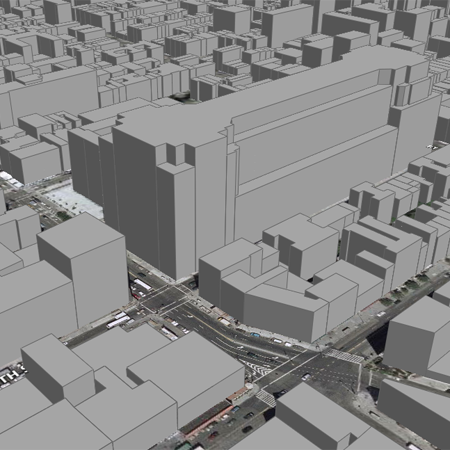
This is the first Sparknotes office. It’s the old Port Authority building between 8th and 9th Avenues and 15th and 16th Streets. In this image, we’re looking towards the southwest corner, 15th Street & 9th Avenue. It was a massive building; we were on the 8th floor which extended over most of the block. It turns out Google Earth lets you see buildings in some parts of New York, so here are some buildings. Curious that it looks like two cathedrals laid narthex to narthex. I was working in the one that pointed the wrong direction.
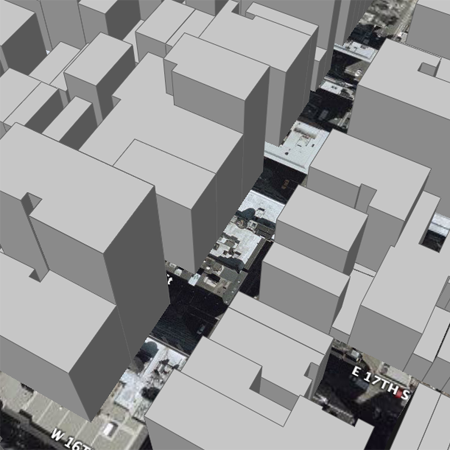
Here’s the second Sparknotes office that I worked in, at 120 5th Avenue, in a building beset by the Gap all around. The avenue seems to have the roof in it – Google hasn’t perfected everything yet.
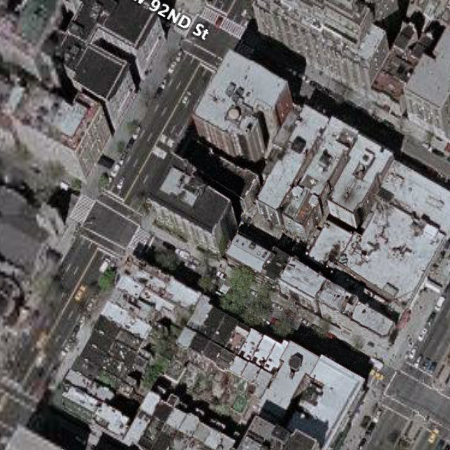
Here is the first office of the Institute for the Future of the Book, Ashton’s old apartment at 91st Street & West End Avenue. I like how West 91st Street gives the impression of being a park from above. It turns out that Google Earth has no buildings for this part of Manhattan (or, for that matter, anywhere else that I’ve worked): are only commercial buildings really buildings?
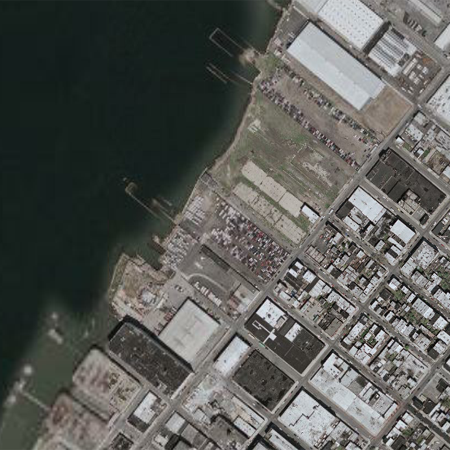
And here, zoomed out to show the river, is the current office of the Institute, on North 7th Street in Williamsburg.
New York is so gray in these maps. That wasn’t intentional.
a cartography of working: part 3
(being where I worked in Rome)
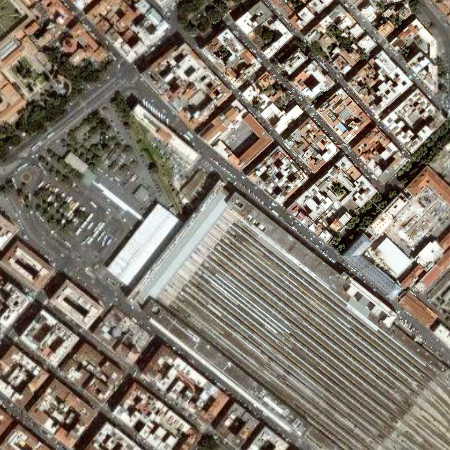
Here is the Enjoy Rome office, north of Termini on Via Marghera. There was an earlier Enjoy Rome office on Via Varese near the corner of Via Castro Pretorio which is also in this map but I didn’t work there.
a cartography of working: part 2
(being places where I worked in Cambridge & Somerville)
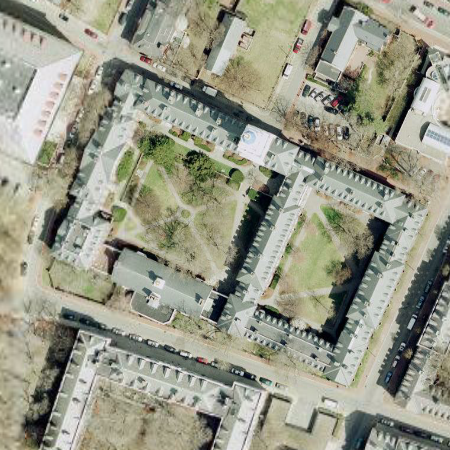
Here is Lowell House, which I cleaned as part of dorm crew. I cleaned other houses at various points, but Lowell’s the first one I cleaned, I think.
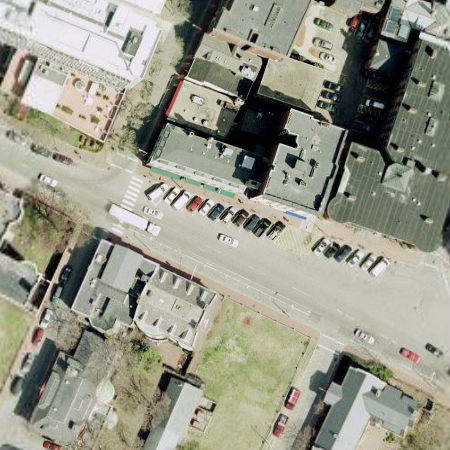
Here is the Let’s Go office (just north of Lowell House) where I worked for two summers as well as a good amount of other time during the school year. There was another summer spent working for Let’s Go in Rome, but that more properly belongs in a cartography of habitations.
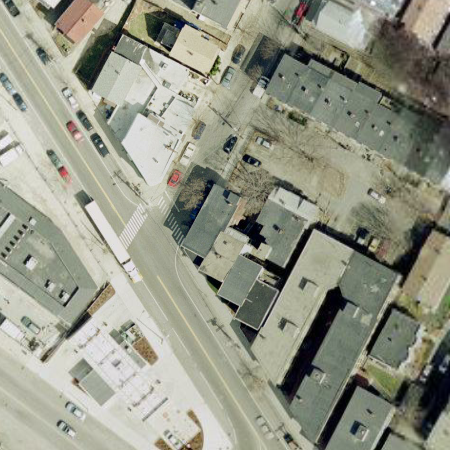
Here is the first Cognoscenti office, just north of Cambridge in Somerville. Later it moved much farther north into Winter Hill, but I don’t know precisely where that was. Here I drew maps and did other things. I later worked for Cognoscenti in Rome, but I don’t know if that counts.
a cartography of working: part 1
(being places where I worked in Illinois)
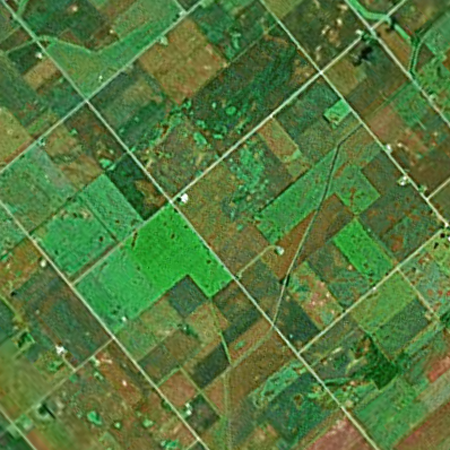
This is imprecise, because I don’t remember which cornfields I actually worked in as a detassler. But all cornfields look the same from above, which is presumably why Google doesn’t dignify them with high-resolution photos.
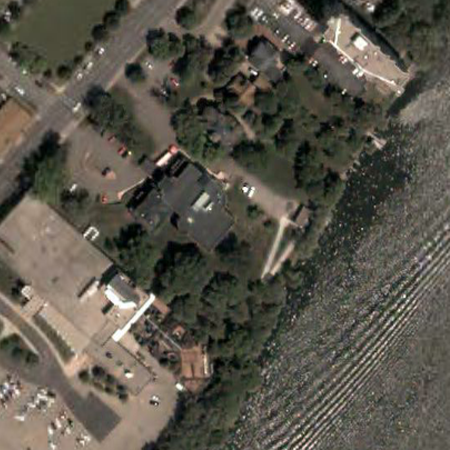
Here is the Burpee Museum of Natural History, where I was a reptile keeper and did various other things in my youth.
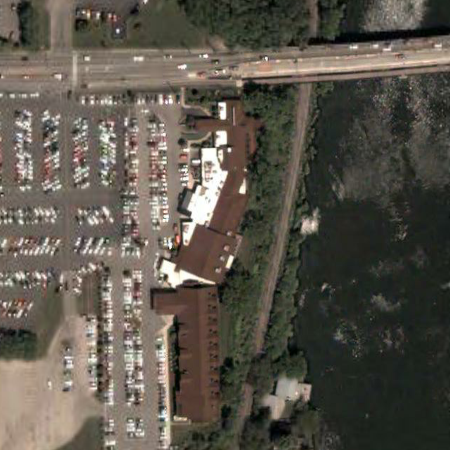
Here, farther north on the same river, is Cliffbreakers, a restaurant where I was a banquet server/busboy. It didn’t have the hotel attached to the southern end when I worked there.
wichita lineman no. 6: sergio mendez & brazil ‘66, “wichita lineman” (1969)
As mentioned in Cassandra Wilson, this is another version of the song sung by a woman, whose name, alas, I cannot discover on Allmusic.com. She is the anonymous singer of Sergio Mendes & Brasil ’66, who, in 1969, released their cover of the song on Ye-Me-Le. It was enough of a hit that it was rereleased as one of Twenty Easy Listening Classics. Ye-Me-Le is mostly covers of popular pop tunes of the time – it’s followed up by “Norwegian Wood”. This version feels a bit perfunctory, maybe with some historical reason: I have 11 other cover versions from 1969.
It’s quick: 2:47. There’s a spritely intro full of Latin percussion for ten seconds, then things slow down, for the verse, speeding up again after the chorus. What’s nice is that this start-stop dynamic is carried through the song: you can neatly divide it into three sections. Just before the third section starts, there are orchestral flourishes. The third section is followed by the glorious full-speed ending, with scat singing, probably improvised. This is the best part of the song – it could go on for another three minutes and I’d be quite happy. Probably this would have been a better song-as-a-song if they cut the first two choruses and verses and started with the orchestra at about 1:30.
The lyric here (sung in English) is quite honestly disposable. As mentioned previously, the position of the singer does get switched up in the first two lines (“He is a lineman for the county / And he rides the main roads”) but this isn’t followed up in the rest of the song. She goes back to the original “you” in “I can hear you through the wires”, and soon afterwards “I know I need a small vacation”. There doesn’t seem to be a connection made to the song’s switch to the third person later, which Cassandra Wilson makes. I don’t think this is particularly thought-out – it’s an easy cover version.
There’s undoubtedly something to be said about the cultural context of this version, but I don’t feel qualified to say anything about how Brazilian musicians covering “country” songs would have been received in the United States in the late 1960s. Were Sergio Mendes & Brasil ’66 seen as a novelty act? From the evidence of this song, I’d say they saw themselves as entertainers rather than artists, but it’s hard to tell.
Is this cover a novelty song? It’s certainly a jolly rendition of a sad song. I’m not sure that it’s being disrespectful to the song, however, so much as it’s using it as a base to play with. There’s a clear joy in how the song takes off when it leaves the choruses, which I think is the real worth of this rendition. Rather than a novelty, the cover might be being used as a Trojan horse to get that in the door.