Archive for the 'reviews' Category

Page 3 of 11

muammar al gathafi, “the green book”

Muammar Al Gathafi
The Green Book
(revised English edition; translator unknown)
(World Center for the Study and Research of the Green Book, 2009; originally 1975.)


There are not a great many interesting souvenirs available in Libya, which is not, perhaps, surprising. But you can buy copies of Qaddafi’s The Green Book in many places, in many different languages, for very little money (5 Libyan dinars, around $4), which is how I came to have this. This edition is a hardback published in 2009 by the imposing-sounding “World Center for the Study and Research of the Green Book”; it’s a short book, 96 pages long, and the back explains that it’s been “republished in a new translation,” but I don’t know if this means that the text has been changed since the original. I am not, of course, any sort of expert on Libya or political systems; I was in Libya largely because I wanted to see the Roman ruins on the coast. My opinion is of course that of an amateur; but Libya is an interesting country, bearing little resemblances to most American preconceptions of it, and a good part of that is due to the idiosyncrasy of Qaddafi’s ideas.

Qaddafi came to power in 1969 in an officer’s coup; a week later, he seems to have emerged as the leader, improbably, as he was only a colonel. (The idea floats around Libya that the coup, and Qaddafi’s rise, was American-sponsored.) but by 1975, Qaddafi had codified his ideas about how the state should be run in this book, which announces his “Third Universal Theory”. The first and second theories were democracy and socialism; the third builds on these to create an elaborate systems of people’s committees which report back and forth and thus govern the country. The first third of this book announces “the solution to the problem of Democracy”; the second, “the solution to the Economic problem”; the third, “the Social Basis of the third Universal Theory”. Green marginal notes (often in the form of slogans, some incomprehensible (“No representation of the people representation is a falsehood”) appear to the left of the text; some of these also appear on billboards in the country.

Qaddafi begins with a discussion of political systems; he sees flaws in democracy, as popularly practiced, and socialism. While his criticisms often make sense (representational democracy isn’t as particularly representational as you might hope), he jumps to conclusions:

Political struggle which culminates in the victory of a candidate obtaining 51 per cent of the total votes of electorate, establishes a dictatorship in the seat of power garbed in the guide of democracy. It is in fact, a dictatorship because 49 per cent of the electorate would then be governed by an instrument of government they did not vote for, and which has been imposed upon them. This is the essence of dictatorship. (pp. 7–8)

One wonders if something has been lost in translation: he doesn’t seem to be using the word “dictatorship” as it’s usually received. There’s something that’s right here, of course; he does astutely note that what works for campaigns isn’t necessarily what’s right for government. Or his thoughts on referendums:

Referendums make a mockery of democracy. The people who respond with “yes” or “no” are not actually expressing their will, but rather are constrained to respond as such because the concept of modern democracy so dictates. They are only allowed to select one of two words: either “yes” or “no”. Referendums represent the most extreme repressive dictatorships. Individuals who respond with a “no” should be able to state their reasons for this response and why they refrained from responding with a “yes”. Similarly, individuals who respond with a “yes” should be given the opportunity to justify their consent and explain why they did not choose to give “no” as an answer. Each should be able to speak out and give the reason for agreement or disagreement. (pp. 19–20)

(This is glossed as “Referendums make a mockery of democracy” and “Individuals must have the opportunity to justify opinions”.) He’s right to point out that there are problems with referendums (cf. California’s governments); however, his response is puzzling. The problem is with democracy; he solves this by redefining democracy to mean People’s Congresses and People’s Committees. Here’s how:

Firstly, the people are divided into Basic People’s Congresses. Each of these selects its own secretariat. The secretariats of all the People’s Congresses together from (sic) Congresses other than the Basic People’s Congresses. The masses of the Basic People’s Congresses will then select administrative People’s Committees to replace governmental administration. From then on, all public institutions will be run by People’s Committees which act answerable to Basic People’s Congresses whcih dictate policies and oversee their implementation. Thus, both the administration and supervision become the people’s responsibility and the outdated definition of democracy – democracy is the supervision of the government by the people – is finally done away with. It is replaced by the true definition: democracy is the supervision of the people by the people. (p. 23)

This is glossed “Committees everywhere”. A rather complicated chart attempts to explain the interrelations of the various committees and congresses but leaves me entirely confused, as does how this theory actually relates to practice, if at all. Qaddafi’s word for this is the neologism jamahiriya (جماهيرية), a derivation from the the words “republic” and “masses”; maybe in English you could call it a “repeoplic.”

The second section of the book attempts to explain economic theory. To summarize by its glosses:

  • Wage earners are a kind of slaves, even if their wages improve.
  • The ultimate solution is to abolish the wage system.
  • In need no freedom indeed.
  • Masters in their own homes.
  • Land is no one’s private property.
  • The legitimate objective of the individual’s economic activity is solely the fulfilment of their material needs.
  • A house should be serviced by its occupants.

Qaddafi’s reasonable progressive here; he explains that it’s very important that everyone should have their own home, but everyone should only have one home, because that’s where trouble starts. One should also have a vehicle. Domestic servants lead quickly to slavery.

The third section of the book explains his social thought; here, the book becomes itself. The family and religion are at the center of Qaddafi’s world; everyone should have both. The family is extended to the tribe, which perhaps makes sense in Libya, but which makes one a bit wary. From the tribe springs the nation (“a large extended family that has passed through the tribal stage – the tribe, then a plurality of tribes, that have branched out from one common source”). Next there’s a section on women; Qaddafi is paternalistic (“Women, like men, are human beings”) and almost buffoonish (“According to gynaecologists women, unlike men, menstruate each month”), but he comes to the conclusion that although women and men are separate they should be equal. Nurseries are tyrannical; motherhood should be respected as work. Some questionable science comes into play (“The male in the plant and animal kingdoms is born naturally strong and striving, while the female in both kingdoms is naturally born beautiful and gentle”), echoed in the Lamarckianism in the section on music and art:

If a community of people wears white on a mournful occasion and another dresses in black, then each community develops particular attitudes towards these colours: one community would like white and dislike black and the other like black and dislike white. Moreover, this attitude leaves a physical effect on the cells as well as on the genes in the body. This adaptation will be transmitted by inheritance, and the heir would come to dislike the colour disliked by his parents, as a result of inheriting their feelings. Consequently people only relate to their own arts and heritage. Due to the factor of heredity, this feeling of harmony eludes them when they come into contact with the arts of others who differ in heritage and yet speak a single common language. (pp. 88–89)

This is, of course, ridiculous; the book is finished with a section on sports and horsemanship, where Qaddafi comes out against public spectacles (unbecoming in a democracy) and for private practice. There are now, however, soccer teams in Libya, as well as increasingly visible private corporations; it’s hard to tell how seriously the Green Book is taken now.

Qaddafi seems to have followed Duchamp’s lead in following up his Green Book with a White Book in 2002, but the White Book seems mostly inaccessible (save for a pile of Spanish translations I found in the gift shop of the Libyan airport). One can, however, read the White Book in the Green/White Book Room in the new hi-tech Museum of Libya in Tripoli; the White Book is smaller than the already small Green Book, and seems to contain Qaddafi’s proposed solution to the Israel/Palestine problem (one state, to be called “Israstine,” based on the model of Lebanon. See his op-ed from 2009 in the NYTimes.

Qaddafi’s hope with the Green Book seems to have been to export the jamahiriya elsewhere. This doesn’t seem to have gone very well; it seems possible that the reason he’s done as well as he has in Libya is that it’s a small country, population-wise: around 9 million people, the majority of them clustered around Tripoli; there’s also a huge amount of revenue from oil. How well this works in the future is a good question.

elizabeth hardwick, “new york stories”/”sleepless nights”

Elizabeth Hardwick
The New York Stories of Elizabeth Hardwick
(New York Review Books, 2010)

Elizabeth Hardwick
Sleepless Nights
(Random House, 1979)


Two books by Elizabeth Hardwick, both rather small. New York Stories is a posthumous compilation of Hardwick’s short stories involving New York: while this appears to be the first collection of her short stories in book form, I’m not sure offhand how complete a collection of her stories this actually is. At 200 pages, it’s a thin book. Sleepless Nights is a short novel from 1979; while it’s been reprinted by New York Review Books fairly frequently, my copy is an old hardback. Part 8 of this novel, first published in the New Yorker, also appears in The New York Stories under the name “The Faithful”: there’s almost the feeling that that book needed padding, that it might not have appeared substantive enough without more pages.

New York Stories is an oddly structured book. The earliest story here is from 1948; six are from the 1950s, and then there’s a twenty-year gap before “The Faithful” appears. There are three stories from the 1980s, and the last from 1993. The first half of the book, then, might be described as New Yorker-style stories from the 1950s; the second half deals with the fractured New York of 1980. Her novels seem similarly disjunct: The Ghostly Lover appeared in 1945, The Simple Truth in 1955; both of these, which I have not read, seem to have been out of print for a while, but maybe NYRB will get around to them. There’s no great secret for the gap in her fiction: in between these two periods, of course, Hardwick was busy founding, editing, and writing for the New York Review of Books.

The stories from the 1950s are good for what they are; I should admit that the American short story from that period isn’t a form of which I’m particularly fond, perhaps a myopia. There is sociological interest: Hardwick is a good observer, and her characters are sharply drawn. Here, for example, she delineates a professor seen at a dinner party:

Clarence, a bachelor and only thirty-eight, was nevertheless a lover of things as they once were. Everything seemed to him to have been subtly degraded, from the quality of bread to the high-school curriculum. Violent feelings of disappointment, exhausting worries about the future of culture, had a fierce dominion over Clarence’s existence. He was so fully and abjectly under the tyranny of these feelings that the feelings themselves were in his own mind mistaken for “work.” When he was angry with a colleague, defeated in a committee meeting, dismayed by the poor preparation of the students, these experiences seemed to him to be his job. They were much too devastating and severe for him to take lightly. In judging his extremity of emotion, he found it simply an example of his greater diligence and dedication, his superiority to the mechanics being turned out by the graduate schools. Clarence cared, he suffered, he worried. Nesbit’s Under-Secretary of State airs and his desire to be an important figure in the intellectual world seemed to his critic, Clarence, to be a slighting of the great career of education. (“The Classless Society,” pp. 93–94)

This story, as far as I can tell, is not a New York story at all as it takes place at the University of Chicago; although it might be argued that the characters behave much more like they would in New York than they might in Chicago. Hardwick’s interest is the intellectual set; artists and bohemians behave like artists and bohemians, people complain, inevitably, about how the Village isn’t what it used to be. My failure to engage with these stories isn’t because Hardwick’s writing is bad – it certainly isn’t, and it obviously wasn’t her job to please me at this date; rather, it’s because all of this seems so familiar.

When Hardwick starts writing again – both in the later stories in New York Stories and in Sleepless Nights – one almost senses that Hardwick herself might have been bored with what she was doing before, or realized that she’d run into a dead end. Sleepless Nights bears a certain stylistic similarity to Renata Adler’s Speedboat, which would have come out a few years before. In comparison to her earlier stories, Hardwick’s fiction from 1979 on seems decidedly more invigorated, with a new sensibility to the potentials of form; but it does come off as ineluctably dated, in the same way that color film can be pinpointed to the 1970s by that particular fade. Narration shifts to the first-person, of course; the protagonist of Sleepless Nights is named Elizabeth and is from Kentucky; the prose is considerably more fractured, and more explicitly literary: in a single paragraph early in the book, one finds reference to Pasternak, Leconte de Lisle, Hugo, and Ibsen.

Modernism has been taken into account in Sleepless Nights, as it isn’t particularly in Hardwick’s stories from the 1950s. Sleepless Nights largely dispenses with plot; there’s a central consciousness, Elizabeth, but the narrative shuttles back and forth across time and space (a central focus being New York around 1973), and each of the ten sections could function individually. Secondary characters come and go, generally not making it across the section dividers; the one stable character is an M., to whom Elizabeth writes letters included in the text, but it’s unclear whether these letters have been written to be sent. The language feels more free than in Hardwick’s earlier stories: compare another passage describing a party:

This is what I heard in the evening. At the party everyone was intelligent and agreeable, but not particularly good-looking. No person of talent had brought along a new, beautiful, young girl, who being new and not knowing all the names would seem rude and superior, thus sending arrows of pain into the flesh of the older people who were known for something. Eyeglasses glimmered. Academics, like old barons of the Empire, coughed out their titles and universities and yet quickly the badges dimmed and their faces returned to the resignation brought on from too many lectures, and the docile, not-quite-interested smiles of students. (p. 48)

This is more interesting to me than the prose of the earlier stories: there’s distance implied. It’s unclear from this party whether the narrator was at the party in question or heard this description from someone else (this is left vague in the broader context that this passage occurs in); but it implies an individual consciousness having digested experience in a way that’s more subjective than the omniscient third-person in “The Classless Society”: Elizabeth the narrator is tired of this sort of party.

For me, Hardwick’s fiction remains secondary to her criticism, though I probably would pick up her two earlier novels if I came across them. With a Harper’s account, “The Death of Book Reviewing” can be read online; she’s still right, of course, about the mediocrity of the NYTimes Book Review.

herman melville, “moby-dick”

Herman Melville
Moby-Dick
(Penguin Classics, 1987; originally 1851)


It’s been a long time since I sat down and read Moby-Dick: I vaguely recall doing that sometime after arriving in New York, and certainly I’ve picked through the book for important passages. But it’s been too long; with the end of the year coming on, it seemed a good time to go back too see what’s changed there. This Penguin Classic seems to be the version on the shelf at home; in college I had a cheap Signet that we probably got rid of when K. & I combined our books. The inside front cover bears a dedication “to ‘Poop Deck’ Bowen / a mighty sailing man / from / Corona Dan / your matey / Merry Christmas / 1987″: those two don’t seem to have written anything else in the book, though one always wonders how many copies of Moby-Dick have been read at all. The introduction and notes of this edition, done by Harold Beaver in 1972, are extensive but a bit too jocular & Joycean (back cover copy of this book compares Melville to Nabokov, ), yet seem to neglect whatever it is that I really want to find out. Obviously, it’s my own fault for not having a Northwestern-Newberry edition, which came out a year or so after this book, and which Penguin seems to have picked up for later editions of this book; this edition clocks in at just over a thousand pages, a good chunk of it notes and explanatory material, and one feels a little bad for poor forgotten Harold Beaver.

This book can be counted on for the kick of strangeness, which comes quickly: this threat buried in “Extracts” among the other quotes about whales from literary history still has a kick:

“If you make the least damn bit of noise,” replied Samuel, “I will send you to hell.”
Life of Samuel Comstock (the mutineer), by his brother, William Comstock. Another Version of the whale-ship Globe narrative.)

There’s something to still being able to be surprised by a book. It’s still there, even in the second paragraph of the first chapter, a description of Manhattan “belted round by wharves as Indian isles by coral reefs – commerce surrounds it with her surf”. The preoccupation with economics comes back on a personal level: the narrator explains that he goes to sea as a sailor rather than as a passenger because of the difference between paying and being paid:

And there is all the difference in the world between paying and being paid. The act of paying is perhaps the most uncomfortable infliction that the two orchard thieves entailed upon us. But being paid, – what will compare with it? The urbane activity with which a man receives money is really marvellous, considering that we so earnestly believe money to be the root of all earthly ills, and on no account can a monied man enter heaven. Ah! how cheerfully we consign ourselves to perdition! (“Loomings,” p. 97)

The notes to this edition don’t point out that the “two orchard thieves” are Adam and Eve, which is vexing. But this is a strange idea, of course: to link the fall in the Garden with the necessity of capitalism. Melville does this later, in “The Paradise of Bachelors” and “Bartleby,” I think – but it’s strange to see the morality of capitalism turning up so quickly in the book; it’s something that recurs, of course.

The way this book is structured is also strange: the first 25 chapters are the narrative of Ishmael, who is soon joined by Queequeg in what almost seems a buddy comedy (or, by the notes of this edition, a gay romance) where they learn the limits of tolerance. Then they board the ship, and Queequeg takes his ranks among the mates and harpooners; Ishmael seems to disappear entirely, dropped by the narrative voice as a useful device. Perhaps the changeover happens in Chapter XXIII, “The Lee Shore,” in which the character of Bulkington, previously set up to be important in the narrative, is disposed of; Ishmael also seems to disappear here. The next chapter sets out with the words “As Queequeg and I are now fairly embarked in this business of whaling”; but this “I” doesn’t really seem to be Ishmael any more; it seems to be the author, who can pull up references from other books – as the narrator does in chapter XXIV – rather than the entirely undistinguished-seeming Ishmael, unlikely to provide such exegeses. But the split is never made clear: Melville seems uninterested in such niceties. Certainly by the last paragraph in the same chapter (source of the title of the C. L. R. James book) it is not Ishmael speaking:

If, then, to meanest mariners, and renegades and castaways, I shall hereafter ascribe high qualities, though dark; weave round them tragic graces; if even the most mournful, perchance the most abased, among them all, shall at times lift himself to the exalted mounts; if I shall touch that workman’s arm with some ethereal light; if I shall spread a rainbow over his disastrous set of sun; then against all mortal critics bear me out in it, thou just Spirit of Equality, which hast spread one royal mantle of humanity over all my kind! Bear me out in it, thou great democratic God! who didst not refuse to the swart convict, Bunyan, the pale, poetic pearl; Thou who didst clothe with doubly hammered leaves of finest gold, the stumped and paupered arm of old Cervantes; Thou who didst pick up Andrew Jackson from the pebbles; who didst hurl him upon a war-horse; who didst thunder him higher than a throne! Thou who, in all Thy mighty, earthly marchings, ever cullest Thy selectest champions from the kingly commons; bear me out in it, O God! (p. 212)

Soon after this, the narrator will be reporting conversations between other people that Ishmael can’t possibly have heard; while occasionally the narrator makes reference to being a sailor on the ship, it’s hard to say anything substantive about what Ishmael does on the Pequod aside from his link with Queequeg. Ishmael is an unlikely character, seemingly too well read: it’s hard to imagine why someone who was ostensibly once a common sailor would be as well-versed in Paracelsus and Thomas Browne as the narrator is. Melville, of course, fits this description; but Ishmael as authorial surrogate is even more confusing, as Melville seems to be going out of the way to efface himself from his narrative.

I’ve spent more time with Pierre and “Bartleby,” the works Melville wrote after Moby-Dick since my last reading of this book; what strikes me about Moby-Dick is how comparatively baroque the language is. It’s almost frightening, looking back, to realize how quickly these three works were composed; but with Moby-Dick, Melville seems to be enthusiastically throwing everything at the book, following every digression and having fun doing it, something that he doesn’t do as much in the following works. The germs of both Pierre and “Bartleby” might be found here; the aforementioned self-effacement leads to “Bartleby”; Ahab’s ambition foretells Pierre’s self-destruction. Clare Spark has argued that Melville intended Ahab to be seen as a hero rather than the anti-hero we usually see him as: read with this in mind, it’s hard to tell who, if anyone, the reader is meant to identify with among the characters if not Ahab.

joseph mcelroy, “night soul and other stories”

Joseph McElroy
Night Soul and Other Stories
(Dalkey Archive, 2011)


Having attended most of Joseph McElroy’s readings in New York since the release of Actress in the House, it feels a bit strange to be reading this volume of short stories, his first: I’ve heard a good number of them aloud before seeing them on the page, one twice. Some of them seem, in memory, to have been presented differently: what’s here called “Mister X” was read, I think, as part of Cannonball, a short novel; “Character” was an excerpt from Voir Dire, another novel. I don’t know what’s happened to those books; perhaps they’ll be published some time soon. The long-promised water book is evidently finished; an English version of Exponential could be assembled; and looking through the list at his site, it seems like another volume as large as this one could be assembled of uncompiled short stories. There’s a great deal of Joseph McElroy’s work that doesn’t exist in book form in English: this is frustrating, of course, but it’s also reassuring: there’s more of his work to come.

The oldest of the stories in Night Soul go back to 1981: “The Unknown Kid,” published in TriQuarterly then was originally part of Woman and Men, while “The Man with the Bagful of Boomerangs in the Bois de Boulogne,” which feels almost of a piece with Lookout Cartridge, appeared in the Partisan Review in 1984. But seven of the twelve pieces here were written after 2000: most of this is fairly recent work. And though the pieces are separated across time, atemporal groupings can be recognized in the repeated themes: sets of fathers and sons; characters from the city in the rural environment of New Hampshire in the past; disparate characters in New York in the present or near-present. The eponymous protagonist of “Mister X” asks questions of his acupuncturist:

Could Qi flood you? he asked. It was not really like that – a river, she said. His eyes closed, he dismantled the adjacent daybed opening the damn thing stretching the material. (Was Qi a two-way street? And why “daybed”? Why Leonardo? (pp. 73–74)

The reader of this book recognizes this confluence of rivers and Leonardo: hinted at is his plan to move a river for strategic purposes, mentioned in “No Man’s Land”:

Da Vinci those call him who think that was his name, said uncle, who confirmed that Leonardo had set out to move a river. Nomads would not do that. They would cross it. (p. 14)

McElroy’s precision with names is, of course, a subset of his precision with words. In “The Man with the Bagful of Boomerangs in the Bois de Boulogne”:

. . . I wanted to (as Baudelaire says) “accost” this boomerang man. (p. 38)

Later, in “Night Soul,” a man listens to the vowel sounds (“ah,” “eh,” “uh”) his sleeping son makes (sounds also mentioned at the end of “Particle of Difference”) and tries to attach meaning to them:

So to the man it meant, what you found; while the next, the eh , as in “again,” stops what you found and holds it to what it is: accosts it, accosts what? the moon moving? a knife of reflected light cut by the ceiling beam? or a memory you can’t have all by yourself? (p. 283)

Baudelaire isn’t mentioned here, but it can be surmised that he stands behind the accosting. Each of these stories works separately; but placed together, there’s a resonance, and one wonders if all of McElroy’s work might be put together into a giant roman fleuve, “”a memory you can’t have all by yourself,” a record of consciousness greater even than Women and Men.

There are outliers, of course. “The Campaign Trail” and “The Last Disarmament But One” are more overtly fabulist than anything else in the book, science fiction of a sort, though not quite in the same realist mode as Plus. “The Campaign Trail” imagines the 2008 Democratic presidential primary much like a Matthew Barney film of the subject might: unnamed figures representing Hillary Clinton and Barack Obama ceremonially confront each other in a wild area of what once was Canada (seemingly the Burgess Shale, where some of the oldest fossils in North America can be found). It’s clearly a political allegory, but the meanings are hazy: what does it mean that they kill a wolverine-like beast eating a fawn? “The Last Disarmament But One” is similarly opaque: a neighboring country disappears completely overnight, leaving a crater. Connections are made between physics and children’s drawings; one senses America of the present in there somewhere, as well as, perhaps, the trace of Julian Gracq’s The Opposing Shore, but McElroy has made of this amalgam science fiction of a strange sort:

Not recently heard from, the once distinguished particle geologist with a crater in him turned to the harvesting of stained-glass minerals. Some How scientists became Whats overnight and claimed that the interesting work was now interdisciplinary. My own attachment to the great event, the loss of that neighbor nation, I one day saw confusingly and not clearly but chokingly, was like when I lost the mother of my child and heard her voice for months as on an interdisciplinary telephone or as only a function of my own deafness, and was glad I had spoken to her so often before she died. (p. 210)

This voice in this paragraph suggests Don DeLillo, who took a few tricks from early McElroy; but what McElroy is doing here seems a ways away from DeLillo’s recent work. Science fiction here is useful shorthand: writing in that mode allows one to use the phrase “the once distinguished particle geologist with a crater in him” with impunity. This is explained in context, as are the Hows and Whats; but three reads in I still haven’t understood with McElroy’s doing here.

Here and elsewhere in the book, McElroy shows that he’s still deeply interested in trying to understand the worldview of the scientist, perhaps in a lonely attempt to rebut C. P. Snow’s Two Cultures. (See also a piece from a few years ago, where he observes a neurosurgeon at work.) Scientists and engineers, usually men, wander through McElroy’s fiction, wondering about how to understand and approach big problems: again and again, he’s interested in how they think, and how they engage with ideas. The technician, for McElroy, might be an image of the writer.

jules renard, “nature stories”

Jules Renard
Nature Stories
(translated by Douglas Parmée)
(New York Review Books, 2010)


This is an edition of Jules Renard’s Histoires naturelles translated by the late Douglas Parmée and with illustrations by Pierre Bonnard. Parmée died in 2008; his introduction to the book gives the impression of having sat on the shelf for a while. NYRB presumably took advantage of the good feeling engendered by Tin House’s republication of Renard’s Journal in 2008 as an excuse for publishing this volume; another version of this book seems to be out from Oneworld Classics in the translation of Richard Stokes with illustrations by Lucinda Rogers. I haven’t seen that version, though I’d like to; Parmée’s introduction indicates that he selectively reworked Renard’s text to work better in English, and the NYRB edition is much longer than the Oneworld version. Two earlier editions of this book appeared in English in 1966: George Brazilier published a translation by Elizabeth Roget in 1966, and the Horizon Press published one by Richard Howard; both featured illustrations by Toulouse-Lautrec and seem to have largely vanished. What inspires such bursts of publication is unclear to me. But even among this year’s crop of translations, the Parmée and Stokes translations aren’t, for what it’s worth, the most interesting edition of this book; that would be a limited Italian edition with illustrations by Luigi Serafini, the existence of which has the unfortunate side effect of making this particular edition seem rather cheaper than it should.

This book consists of 84 short pieces, most describing a single animal, most around a page long. Some are as short as a few words; others almost form short stories of a couple pages. Occasionally Renard strays from the animal world to describe a forest, rain, autumn leaves, a sunset; a few pieces describe human action: looking at the wild, waiting with a gun for an animal to appear. Many of the animals are domestic; most are encountered in the wild, and one section describes animals seen in a zoo. Though the book is ostensibly about nature, he and his family recur throughout as characters: in a longer piece, about the death of a family dog, there’s a sharp description of their reaction that might be from another sort of book entirely:

Out of a sense of decency, to avoid admitting that we’re so upset by the death of a little dog, we’re thinking of all the human beings whom we’ve already lost, those we might be going to lose, all those dark, icy, mysterious things impossible to understand. (p. 27)

For most of the book, however, Renard isn’t so explicit. Nature Stories is almost contemporaneous with Jean-Henri Fabre’s Book of Insects, and though Renard isn’t by any stretch of the imagination a scientist he often ends somewhere similar. In both, the natural subjects are anthropomorphized to a degree, though they can’t usually be usefully roped into allegory: they are, fundamentally, strange, and while their ways can be observed and understood, there’s always a distance between the observed and the observer, as pointed out by his preface to his description of “a miserable sunrise”:

The sun doesn’t rise twice in the same place and in the same way. There are as many suns as there are impressions of them, which would cancel each other out. Anyway, it’s very nice to see one a year and you’re quite likely to miss it the first time. All it needs is for the sky to be closed down. The following day, are we likely to be less keen? It’s possible that on the third day, we’ve given up trying to see such a capricious sight or that the sun rises only in our imagination and the reader is still not deprived of a stylish page of fiction. (p. 76)

Like Montaigne or Joseph Joubert, Renard’s focus is as often as not on himself as observer. But in Renard’s work we might also see the genesis of Francis Ponge’s attempts to come to terms with objects. Renard’s work doesn’t generally qualify as prose poetry, though sometimes the shorter pieces suggest this: here, for example, is the entirety of “The Spider”:

A little hairy black hand, tensely poised on yet more hair. (p. 72)

Or “The Cockroach”:

Black and clogged up like a key-hole. (p. 70)

though the concision here suggests nothing so much as Ezra Pound’s “In a Station of the Metro” (1913). It’s occasionally that Renard focuses as exclusively on his subjects as in these cases. The individual pieces aren’t dated in this edition; so when we come across “The Green Lizard” in the middle of the book, which reads:

Beware of the paint, (p. 56)

it’s hard to tell how we should read the trailing comma. Is this unfinished? Is this an editorial mistake? (My edition is an uncorrected proof.) Or is it possible that Renard intended this for publication? As printed, this can be read as poetry; it’s much harder to read this as prose. Knowing Ponge, we can read this Renard as a precursor; but it’s not clear to me that this is what Renard would have intended.

Renard’s naturalism is distinctly a nineteenth-century version: he is very much a hunter, albeit one who seems to recognize the cruelty inherent in most of humanity’s interactions with the natural world. He empathizes, but to a point; there is, for Renard, a natural order in the world, and he is a part of that order. Here he is shooting partridges:

This couple of young birds has already started living together on their own. I come on them one evening at the edge of a ploughed field. They were so tightly joined, one wing on top of the other, so to speak, that the shot which killed one dislodged the other one.
     The female didn’t feel anything but the male just had time to see his bride dead and to feel himself dying beside her.
     The two of them have left, in the same place, a little love, a little blood, a few feathers.
     So, with one shot, you’ve managed a double: go and tell your family all about it. (p. 128)

Though it isn’t necessarily clear from this quote, the birds have almost certainly been shot by the narrator himself: he sees what he has done and anthropomorphizes in the name of empathy. But it’s the last line here that might count: the narrator seems to be upbraiding himself for his hubris, for he’s only really managed to kill two birds at once by accident. The conflict is what makes this book interesting; it’s not the achievement that Renard’s Journal is, and this edition leaves something to be desired, but it’s a pleasant and entertaining book.

florine stettheimer, “crystal flowers: poems and a libretto”

Florine Stettheimer
Crystal Flowers: Poems and a Libretto
(edited by Irene Gammel & Suzanne Zelazo)
(BookThug, 2010)


This is a bit unexpected: an edition of the poetry of Florine Stettheimer, best known as a painter, from BookThug, a Canadian press new to me. Over the summer I read her sister Ettie’s novel and became aware of Florine’s poetry, a first published after her death by Ettie in 1949 in a compilation called Crystal Flowers. This turns out to have been impossible to get ahold of because it was published in an edition of 250. This edition, new in November, presents those poems, three additional ones, and the libretto for a ballet; it also wraps them in a fantastic editorial apparatus, with a lengthy introduction, extensive textual notes, a glossary of abbreviations and allusions, and a chronology of her life. Perhaps Florine Stettheimer still isn’t tremendously appealing to the masses: this new version exists, says a note on the text, in an edition of 500, a number that’s painfully small (and perhaps why this isn’t being published by an academic press). But even though not many people will see it, this is still a tremendously useful book, and it deserves some attention.

Florine might be the best-documented of the Stettheimer sisters: it turns out that there are a couple of biographies of her, most recently that of Barbara J. Bloemink in 1995, coinciding with a retrospective at the Whitney, but also one from 1963 by Parker Tyler, whose Divine Comedy of Pavel Tchelitchew still sits mostly unread on my shelves. Irene Gammel, one of the editors of this book, wrote a biography of Elsa von Freytag-Loringhoven which I’m always meaning to pick up. This discussion of biography aside, this book is particularly useful because it’s an edition of Florine’s poetry: and while it is well supplemented by biographical elements, this is, first and foremost, a volume of poetry which can finally be read as such.

Gammel and Zelazo’s edition of Crystal Flowers follows Ettie Stettheimer’s original arrangement of the poem, adding three uncollected pieces at the beginning and adding a short ballet libretto at the end. The poems are grouped into thematic sections: “Nursery Rhymes,” “Nature/Flora/Fauna,” “Things,” “Comestibles,” “Americana,” “Moods,” “People,” “Notes to Friends,” and finally “As Tho’ from a Diary,” a sequence of autobiographical poems. Sequence is important here: the initial poems seem to be self-consciously doggerel in the style of Edward Lear. The first untitled poem:

My neighbor
The Cat
Sat
On a mat
Her mouth
Like a trap
With eyes
That snap
She smiles
At a Rat
And now
She is fat
That’s
That!

This isn’t the most auspicious beginning; and one wonders if Florine Stettheimer would have wanted this published at all, though it seems like the sort of thing that might have been sent to friends: perhaps Ettie’s edition of 250 was as intended as a keepsake rather than a literary production. Turning to the notes, however, we learn that “My neighbor” was Ettie’s emendation for Florine’s original “My daughter-in-law”, which creates a poem of entirely different feeling. There’s no obvious biographical antecedent to take away the strangeness: Carrie, Florine, and Ettie lived with their mother until her death and never married – although their often forgotten older siblings, Frank and Stella, did leave the maternal fold and marry. Gammel and Zelazo’s introduction suggests that comparison might be made to Emily Dickinson; this might be stretching it, but after the run of nursery rhymes, the poetry opens up and becomes more interesting. There’s the suggestion of the influence of H.D.’s imagism in her nature poems, like this tiny one:

Today
The breaking waves
Look like
Ruffled-edge petunia leaves

The poems are unfortunately not dated; it’s hard to tell when they would have been written, and though the Stettheimers would probably have been in the same social circles as William Carlos Williams and Mina Loy, it’s hard to say what Florine would have been reading. The easy sense of rhyme remains a constant through most of her poetry: these aren’t the most rigorous poems, though they’re not as unthinking as the first section might suggest. With “Things” and “Comestibles” the poems become decidedly strange, as the narrator inhabits other consciousnesses and uses riddle-like forms. Here, she becomes a canvas:

I was pure white
You made a painted show-thing of me
You called me the real-thing
Your creation
No setting was too good for me
Silver – even gold
I needed gorgeous surroundings
You then sold me to another man

This isn’t quite as tight as it might be – the third line doesn’t quite work – but there’s still a kick to the last line, forcing the reader to go back. Stettheimer was fond of the second person, which blooms in the “Comestibles” section, where she imagines herself to be various types of food:

You stirred me
You made me giddy
Then you poured oil on my stirred self
I’m mayonnaise

Here one does think of Dickinson: this is undeniably a good poem, and it’s hard to think of anything quite like its terse application of a cheerfully insane metaphor to personal relations. Again the last line kicks, almost anticlimactically in its simple declaration; but it doesn’t solve a riddle so much as start asking questions. This approach isn’t always the one she takes: some of these poems are simply about food, seemingly without a personal component. She starts a poem from the perspective of a pig (“You called me hog”) though her perspective shifts and she seems to end empathizing with a piece of ham: “You changed me completely / Even my name / You called me Ham”. What matters here isn’t that the ham was once part of a pig; it’s the ham’s status as an object, something that can be held in thrall by naming.

The final sections of poems, “People” and “Notes to Friends,” might have the most immediate interest: the Stettheimers inhabited an artistic sphere, and many of their friends turn up here: Carl Van Vechten, Georgia O’Keeffe, Charles Demuth, Gertrude Stein, Marcel Duchamp. The editors’ notes are useful here, pointing out who people referred to by first names and initials are likely to be. The notes don’t take up the temptation to overstretch themselves, however. “A relatively long poem that begins “We Flirted” is left opaque: it tells of a transatlantic flirtation carried out over time, until the narrator says:

“Let’s celebrate
This faithful
long flirtation
give a fête
invite many
They shall give us
Crystal things
Diamonds
Venetian glass
Perhaps
we could accept
Sapphires
Perhaps
we could build
a treasure house
all of glass.”
His glasses
strangely
dulled
his eyes
They became
an opaque barrier
on which
Our flirtation
Shattered
In a thousand
Splinters.

There’s a temptation to read this as being about Marcel Duchamp, who arranged for a retrospective of Florine Stettheimer’s work at the Museum of Modern Art soon after her death. Duchamp, though he led a transatlantic existence, doesn’t seem to have worn glasses while Florine was still alive: but like her, he was very taken with the idea of glass: “a treasure house / all of glass” could describe either of their work.

dore ashton, “the new york school”

Dore Ashton
The New York School: A Cultural Reckoning
(The Viking Press, 1973, originally 1972.)


My art history is the capricious one of the autodidact: I’m not sure that I’ve ever read a proper history of the abstract expressionists in New York, though I’ve read the obligatory work of Clement Greenberg and Harold Rosenberg, and I’m reasonably familiar with New York before and after them, and the Surrealist work taking place alongside them. The abstract expressionists seem so big and cartoonish that actually reading a history of them almost seems beside the point: everyone knows the stories. My first roommate in New York was a painter taught by a (considerably elderly) painter who’d been taught by Hans Hofmann; we went to the Cedar Tavern and I heard about how the original location must have been so much better. It’s hard to muster up desire to go see the big show now up at MoMA: we’ve seen even revisionism many times over now.

Dore Ashton’s The New York School is, for me at least, a useful corrective. Ashton’s work is a cultural history: not so much a study of art but a study of the conditions in which art happens. This, it turns out, is interesting: we tend to forget how things have not always been the way they are now. Early in this book (in a section on the history of the WPA) the state of the arts in the United States in the early twentieth century is pointed out:

The Hoover administration did allocate some funds to states that initiated their own programs, although President Hoover himself, like most of his fellow citizens, gave no weight to the arts. Henry Billings, an artist on the mural project, regards the Roosevelt regime as the first to be even faintly aware of the arts as a necessary part of civilization, and points out that when Hoover answered an inquiry by the French government for an exhibition to include American art, he said that as far as he knew there were no decorative arts in the United States at this time. (pp. 44–45)

This book is as much a history of philistinism as it is one of art: and that’s really what makes it interesting to me. (One might pair it with Martin Duberman’s history of Black Mountain College, which it complements nicely; though with a handful of exceptions – Cage, Rauschenberg, Richard Lippold – there’s not a lot of overlap in the cast of characters.) History is written by the winners; after a century of that, it’s not hard to immediately think of a couple of major artists (Edward Hopper and Georgia O’Keeffe, say) active in the 1920s; MoMA would have just opened in its first incarnation. One forgets, however, that the position of the arts in this country has always been embattled, and Ashton does a fantastic job of tracing this out, closing with the description of a loft party in 1961, names carefully removed:

Many of the old restless spirits were present, but then, so were some 800 others, including collectors, dealers, museum officials, and assorted functional members of a greatly enlarged art world. They were there by written invitation and checked carefully at the door by armed Pinkerton men. Once upon a time, a famous poet remarked, Pinkerton men had been used to chase disreputable elements such as artists. Now the artists do the chasing. It is not easy to understand what had happened. How had this extravaganza come to be, and why? Partly the answers were circumstantial. Ten years before there had been only about thirty respectable art galleries in New York. By 1961 there were more than 300 managing between them to stage close on 4,000 exhibitions a year. This unprecedented growth had blurred the outlines of an art community and caused confusion in the ranks. ((p. 229))

The political undertones here aren’t accidental: Ashton’s politics are made abundantly clear in the book. This is a book written in the early 1970s, when it seemed like things could conceivably change for the better if the lessons of the past were understood. Ashton understands, however, that the forces capable of acting in a small group of unknowns are very different from those of a fully commercialized community. The abstract expressionist explosion happened in part because the core group was small and relatively isolated from outside pressures: this is classic evolutionary theory. If no one’s going to buy your paintings, you can paint whatever you want: it’s not a recipe for success, but it does make it possible.

Ashton’s book does seem dated in certain respects: while she seems to have relied on Lee Krasner for material, she doesn’t really pop up as a subject; women in general are almost entirely missing. Maybe it’s the time she’s covering – Louise Nevelson, Louise Bourgeois, and Joan Mitchell wouldn’t really come into prominence until later in the 1950s and 1960s – but that absence seems jarring. Edwin Denby, Rudy Burkhardt, and Frank O’Hara lurk in the margins of the book, and one senses that Ashton would have liked to bring them further forward – the first photograph of the book is a full-page Burkhardt photo of Denby – but this is mostly a book about straight white men. But I speak with the hindsight of thirty-seven years; on the whole, Ashton is more right than not, and a lot that we’ve forgotten is in this book. The description of how Joe McCarthy went from real estate to being a reactionary, for example, seems eerily prescient:

Old reactionary tactics were revived, and a zealous, ambitious politicians called Joseph McCarthy saw the value of renewing the red scare that had been used before to stave off social reform. It is significant that McCarthy got his start in the field of real estate. Those who had hoped to institute a new era with good public housing and liberalized city-planning were the natural enemies of speculators. McCarthy consciously climbed to political prominence by attacking government housing projects. His first target, in fact, was the Rego Park Housing Project, containing 1,424 units for veterans. He visited the project in 1947 and then called a press conference to denounce it as “a breeding ground for Communism” (at that time he represented the pre-fabricating industry). It was brought to his attention that public housing was not a good issue for him in view of the veterans and the housing shortage, and so he moved into greener pastures, such as the universities, Hollywood, and the cultured classes in general. (pp. 174–5)

w. n. p. barbellion, “the journal of a disappointed man”

W. N. P. Barbellion
The Journal of a Disappointed Man & A Last Diary
(The Hogarth Press, 1984; originally 1919)


W. N. P. Barbellion was the pen-name of Bruce Cummings, a British entomologist who died of multiple sclerosis at the age of 30 in 1919. “Barbellion” he chose because it sounded grandiose; “W. N. P.” stood for “Wilhelm Nero Pilate.” His complete works can be found in very readable format at Ray Davis’s pseudopodium.org; best-known is The Journal of a Disappointed Man, packaged here with a sequel, A Last Diary. Barbellion has fallen into the public domain; there are innumerable shoddy print-on-demand editions of his work on Amazon; but the one I read was properly printed by the Hogarth Press in 1984; it includes a useful biographical introduction by Deborah Singmaster, though it doesn’t include his older brother’s useful preface to A Last Diary. I don’t know anything about the Hogarth Press in post-Woolfian incarnations, but they did publish the copy of Proust’s Contre Sainte-Beuve in English that I have, also from 1984, titled By Way of Sainte-Beuve, in the same format as this one. I find it odd that it’s so hard to find a copy of that book by Proust in English; but I’m inclined to look warmly on anyone who’s publishing it. Looking online, it seems like Chatto & Windus bought Hogarth in 1946; Random House UK bought out Chatto & Windus in 1987, which might be why both of these books seem to languish in publishing limbo at the moment. There seem to have been a few editions of his work since 1984, but they’re hard to find. A second collection, Enjoying Life and Other Literary Remains seems to be even more vanishing.

The Journal of a Disappointed Man is composed of edited extracts of Cummings’s journal, starting when he was thirteen (when he reports that he has “abandoned the idea of writing on ‘How Cats Spend their Time’”) and ends in October of 1917, when he was twenty-eight; the final sentence in that book, seemingly intended to be facetious, declares that “Barbellion died on December 31,” although actually Cummings lived until June of 1919. The Journal records his life, first as he struggles to educate himself enough to become a zoologist, eventually ending up with a mostly thankless job as an entomologist at the Natural History Museum in Kensington. Barbellion has never been in the best health, however; his health worsens as the book continues. In a moment of respite he marries and has a child; his interests turn increasingly to music and literature, and the journal (in its edited form) becomes increasingly a creative rather than a documentary project: in February 1916, for example, he is reading the Goncourts’ Journal. His illness is diagnosed as what would come to be called multiple sclerosis, but the fact is hidden from him; he discovers that before his marriage, his family took his wife-to-be aside and informed her of this.

The Journal of a Disappointed Man is thus something of a familiar form: the record of a man who knows he must die trying to find the most honorable way to prepare himself. This might lend itself to the bathetic; but Barbellion’s work mostly escapes this, perhaps because of the time it was written in: after Darwin (and perhaps Thomas Hardy, who can be felt her), religion has been tossed out as a method for understanding the world. Barbellion’s approach to his predicament has an almost clinical feel, as this excerpt from an entry from January 20, 1917 suggests:

I am over 6 feet high and as thin as a skeleton; every bone in my body, even the neck vertebræ, creak at odd intervals when I move. So that I am not only a skeleton but a badly articulated one to boot. If to this is coupled the fact of the creeping paralysis, you have the complete horror. Even as I sit and write, millions of bacteria are gnawing away at my precious spinal cord, and if you put your ear to my back the sound of the gnawing I dare say could be heard. (p. 274)

Although it’s a powerful image, bacteria don’t actually eat the spine in multiple sclerosis; perhaps that was a valid theory at the time. Despite this jaundiced view – and perhaps patches of depression, though the conscious editing makes it hard to tell – Barbellion takes life as it is and enjoys it: disease is a part of the natural world. The progress of the disease lends an inexorable narrative arc to the book – a possible treatment is mentioned a single time, but there’s a war on & it’s clear that it’s going to be terminal. This progression is modulated by the inclusion of A Last Diary, which stretches from March 1918 to June 1919: this book actually was published posthumously, and it records the progress of the Journal (being championed by H. G. Wells) through the presses. The Diary serves to give something of a happy ending to Barbellion’s story: while the disease grows ever more agonizing, the success of the Journal will allow him to provide for his widow and child, and his literary endeavors have been appreciated.

For its subject, Barbellion’s work isn’t as dark as it might be: the naturalist’s curiosity never leaves him, even though he eventually tires of the institutional structures in which he is made to work. The penultimate entry in A Last Diary captures this:

Rupert Brooke said the brightest thing in the world was a leaf with the sun shining on it. God pity his ignorance! The brightest thing in the world is a Ctenophor in a glass jar standing in the sun. This is a bit of a secret, for no one knows about it save only the naturalist. I had a new sponge the other day and it smelt of the sea till I had soaked it. But what a vista that smell opened up!—rock pools, gobies, blennies, anemones (crassicorn, dahlia—oh! I forget). And at the end of my little excursion into memory I came upon the morning when I put some sanded, opaque bits of jelly, lying on the rim of the sea into a glass collecting jar, and to my amazement and delight they turned into Ctenophors – alive, swimming, and iridescent! You must imagine a tiny soap bubble about the size of a filbert with four series of plates or combs arranged regularly on the soap bubble from its north to its south pole, and flashing spasmodically in unison as they beat the water. (pp. 382–3)

I don’t think Stanley Elkin, a very different writer who also suffered from multiple sclerosis, ever wrote about Barbellion’s work; I hope I’m wrong.

robert walser, “answer to an inquiry” / franz kafka, “blumfeld, an elderly bachelor”

Two small books this time: the first, an illustrated edition of a short Robert Walser piece, the second, an illustrated edition of a long short story by Franz Kafka. The Kafka came out last year though I only recently found a copy; the Walser is from this year, and it’s a new translation, unlike the Kafka. In terms of purely textual content, there’s not much here that the devoted reader of either author wouldn’t already have in some other form; but both of these small books take short pieces and stretch them out to book length, forcing the reader to slow down, an impulse that I find interesting.

Robert Walser
Answer to an Inquiry
(trans. Paul North; illustrated by Friese Undine)
(Ugly Duckling Presse, 2010)


There seems to be a lot of recent Walser projects: I still have a copy of Microscripts on the pile of things to be read, and I know of a couple of other projects in the works. But this little book was near the counter of the St. Mark’s Bookshop last night; I generally like Ugly Duckling if I don’t follow them as obsessively as I might. This is a small book – 64 pages, the majority of the book is illustrations – short enough to be comfortably read on the subway. The text of this book is Walser’s “Answer to an Inquiry” from 1907; it’s followed by an essay by translator Paul North of about the same length. The text felt familiar; Golden Rule Jones points out that it’s previously been translated (as “Response to a Request”) by Christopher Middleton as part of Selected Stories and The Walk. In those editions, the text takes less than three pages: it’s also the lead-off piece in those collections, where it’s presented as a short story. It’s a fine piece, and one can understand why it would be presented first: before so many other stories, though, it’s likely to be forgotten by most readers.

Here it’s primarily expanded through Friese Undine’s illustrations. Walser’s story, as its title suggests, is in the form of a letter; illustrated and given enough room to stretch out (a sentence every two pages), it becomes a sort of handbook; or perhaps a strange expressionist children’s book detailing how to live in an unforgiving world. Undine’s illustrations, which might be pencil drawings, seem to depict a theatrical production put on by bureaucrats; but the characters are ever-changing, and the production leads to the world: satellites circle the earth, a library full of anguished people, a bar, a mother with a homely baby. Screens (television, computer, outdoor advertising) are everywhere; and finally, things begin happening which shouldn’t be happening in the theater: a snake wriggles from a man’s mouth, another sticks a knife through his eye until it comes out his throat, at which point he smokes a cigarette. Walser’s text was published in early 1907; but the atrocities of the twentieth century seem to be predicted in this version of the book. “Whenever humans have progressed beyond the mere struggle for physical existence,” Undine writes in his brief introduction, “there has been theater and the drive towards self-destruction.” Undine finds Max Ernst (The Elephant Celebes) and Antonin Artaud in Walser: this Walser is full of coiled violence and seems newly foreign, different from the dreamy man we thought we knew.

Franz Kafka
Blumfeld, An Elderly Bachelor
(trans. James Stern & Tania Stern; illustrated by David Musgrave)
(Four Corners Familiars, 2009)


It’s easy to forget how enduringly strange Kafka is: he’s been canonized, and his fictional output was small enough that there’s the temptation to read it all at once. I don’t know that I’ve actually re-read The Castle and The Trial since high school; I’ve been better with the short fiction and Amerika. Expanding Blumfeld to book-length is an interesting idea: it’s not quite one of the canonical stories, certainly not in the English-speaking world, and as such Blumfeld is not as familiar a character as Josephine, Red Peter, or Odradek. “Blumfeld” is unfinished; there are no divisions in the text, but it seems to be the first two chapters, the first longer than the second, of a novel.

In the first, Blumfeld, who lives alone, though he wishes for a companion, is visited by a pair of animated balls: “two small white celluloid balls with blue stripes jumping up and down side by side on the parquet”. The magical element goes unnoticed by Blumfeld: “They are undoubtedly ordinary balls, they probably contain several smaller balls, and it is these that produce the rattling sound” (13). Blumfeld is slightly irritated by the dancing balls; they won’t leave him, and he wishes they would stop moving, or at least making noise. In the morning, the charwoman comes; Blumfeld is embarrassed of the balls, and tries to hide them from her. Leaving his apartment, he tries to pass the balls off to neighborhood children; for Blumfeld, the balls are something shameful, perhaps a sign of his status as a bachelor.

In the second part (which starts on page 57 of this edition), Blumfeld goes to work in the linen factory where he works. There’s nothing magical about Blumfeld’s life: the details of work swell up to take all available air, and his position (below his boss Ottomar, above two subordinates who don’t have names) is clearly delineated:

But what worries Blumfeld more than this lack of appreciation [from Ottomar] is the thought that one day he will be compelled to leave his job, the immediate consequence of which will be pandemonium, a confusion no one will be able to straighten out because so far as he knows there isn’t a single soul in the factory capable of replacing him and of carrying on his job in a manner that could be relied upon to prevent months of the most serious interruptions. (p. 63)

The narrative loses itself in the intricacies of the bureaucracy, moving finally to the perspectives of Blumfelds’s assistants, lowest in the office food chain, who have misbehaved:

They obey at once, but not shamefaced or with lowered heads, rather they squeeze themselves stiffly past Blumfeld, staring him straight in the eye as though trying in this way to stop him from beating them. Yet they might have learned from experience that Blumfeld on principle never beats anyone. But they are overapprehensive, and without any tact keept rying to protect their real or imaginary rights. (p. 86)

The two assistants seem to mirror the two balls in the first part of the story; or perhaps Blumfeld treats the balls deferentially because he’s used to treating his subordinates in the same way. “Blumfeld” seems to have been written in 1915; it seems impossible that Kafka would have known Melville’s “Bartleby the Scrivener” or “The Paradise of Bachelors, and the Tartarus of Maids,” though both are suggested here, as might be any of a number of Walser’s works.

David Musgrave’s illustration of the story start with the endpapers of the book: blue and white vertical stripes interrupted by a circle of diagonal stripes, causing optical vibrations: one appears in the front of the book, one in the back, but it’s almost impossible to see both at once. Inside the book, glossy plates appear every eight pages: centered on the front and back of these are murky rectangular images that seem like they might be poorly reproduced photographs of archaeological relics. These images are small; they seem as if they might have accompanied an anthropological text of a century ago. (Samples of Musgrave’s work – I don’t think there’s any overlap with those that appear in this book, though they’re similar – can be seen at Luhring Augustine’s page for him.) The most recognizable seems to be a shark tooth with a stick figure of a person carved on it; but looked at more closely, it’s hard to tell if it’s actually a person at all, as it’s missing an arm, and the circle that should be a head is too big and vertically bisected. Others suggest animals, but aren’t quite recognizable; one feels that there’s an intelligence behind these relics, but it can’t quite be understood. If these were anthropological illustrations, they’re missing the necessary captions.

sergio de la pava, “a naked singularity”

Sergio De La Pava
A Naked Singularity
(Amante Press/Xlibris, 2008)


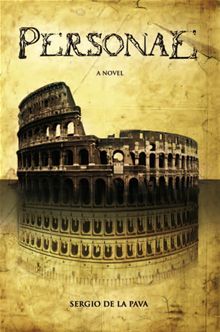
Scott Bryan Wilson told me that I should pick this book up (he’s reviewed the book here), so I did, though it did sit on the shelf for a while. That it’s published by Xlibris rings warning bells, of course, especially a large (almost 700 pages) book, which makes one wonder about the editing without opening it. But one can’t in good conscience accuse the big houses of over-editing these days. And one has to like a book which has a promotional website with an “about the author” section that simply says “Sergio De La Pava is the author of A Naked Singularity.”

The book is narrated by one Casi (Spanish: “almost”; Italian: “cases,” not in the legal sense, but both are applicable here), last name left blank, a 24-year-old public defender in New York. Casi is something of a wunderkind, having maintained a perfect record; over the course of the book, he loses his first case and is brought low by the injustice of the world. The year is 2002; he lives in Brooklyn Heights with a set of college students who seem like they might be a television-mad version of the brothers Karamazov. His family is Colombian; a cousin has been put away for selling hot dogs without a license. The city is obsessed with a pair of seven-year-olds who have murdered an infant; there’s a blackout. A mentally impaired prisoner, failed by the legal system in every possible way, is on death row in Alabama. And there’s a heist, which doesn’t go according to plan: crime is imperfect. Through it all in interpolated a recent history of boxing, having as its center the career of Wilfred Benitez.

The work is meant to speak for itself; there’s something comforting about being back in this space, though the era of the anonymous author has all but vanished. A Naked Singularity, however, loses no time in making clear its antecedents. The book this most resembles is William Gaddis’s A Frolic of His Own, similarly entangled in the legal system; that book’s celebrated first line (“Justice? – you get justice in the next world, in this world, you have the law”) might serve as a theme for this one. De La Pava also shares Gaddis’s knack for unattributed dialogue. There’s an early invocation of the Pynchon of Mason & Dixon: “Now several acorns had successfully flown their sorties, cutting through the frigid air to form interrupted parabolas, when I began to conceive the inconceivable.” (p. 56) Like Gaddis’s and Pynchon’s books, this one is bursting at the seams: court transcripts, letters, and all manner of legal documents find there way in. There are cartoonish names, like in Pynchon, but the clownishness never fully escapes. The language is hyperactive and breathless and might bear the stamp of David Foster Wallace: the word “television,” for example, is always capitalized. But Wallace’s imprint might be found less in the language and more in the book’s deep sense of morality: De La Pava shares Wallace’s concern with how difficult it is to live in a flawed world. Bartleby is invoked, not surprisingly; Dostoevsky is never quite mentioned, though his presence floats through the book (Crime and Punishment and The Idiot, as well as the aforementioned Brothers Karamazov).

It becomes clear to the reader that this isn’t an ordinary work on page 14, when Casi goes off on a two-page digression about the history of Miranda rights, culminating thusly:

The ACLU grabbed the case and 976 days later they were in front of the court that never gets overruled with John Flynn saying, and this is a direct quote (no it isn’t): “look dudes, and I refer to you thusly because this is way pre-O’Connor/Ginsberg, your Fifth Amendment deal is only protecting the rich and powerful: those who are brainy enough to know what their rights are or who have the dough to rent a lawyer.” The Warren Supremes actually agreed and, in the kind of decision that makes maybe five people happy, held that before future police could torment some illiterate sap who nobody cares about into confessing his sins, real or imagined, they would have to inform him of certain rights not covered in your average eighth-grade Social Studies class. (p. 15)

The voice here is what’s astonishing: informed but colloquial, flippant but engaged (there’s a tenderness in “some illiterate sap who nobody cares about”). We can tell exactly what the speaker thinks about the justice of the law (“sins, real or imagined”); but his approach is also pragmatic: this is the America that he has to live in. The breathlessness drives the reader on: while the book is long, it’s never imposing. But most important is the quality of empathy: Casi cares about the illiterate saps in a believable way. This is a book deeply concerned with the preterite: those who don’t have the resources to get themselves represented by others. It’s refreshing to find a recent New York novel that doesn’t bother to mention Williamsburg or Park Slope; the Upper East Side or Upper West Side might be mentioned in passing, but the Village, the East Village, Chelsea, the Lower East Side, the neighborhoods of New York that are seen in movies and literary fiction are absent from this book. There’s plenty left over; but we don’t usually read this.

And this also stands out in that it’s a novel of work: Casi is a public defender, and spends most of his time at his job. The job isn’t lionized here: the protagonist is actively trying to be a good man, but he is decidedly not a hero by virtue of his work alone: the other occupants of his office are noticeably flawed, as he is. The criminal justice system is deeply flawed, as are the people that Casi is given to defend; but it is what there is, and Casi does the best that he can with them. But the job has an inexorable impact on him. This knowledge of one’s own imperfection in the face of the world expands to take over the book: Casi might be any bright young person coming to grips with the world: the heartbreaking career of Wilfred Benitez is made to serve as a sort of parable for the dissolution of dreams.

I’m also struck by how the book, comical as it often is, never has recourse to anything resembling magical realism, for my money one of Pynchon’s primary flaws. The world is often exaggerated in this book – as it well might be when described through a first-person narration – but the world described is always recognizably our own, with all of its horrific flaws. There’s a seriousness underlying this book’s comedy: the book draws its power from the outside world. The joking about the media circus around dead baby Tula that spans the book is funny because we know how sadly real this sort of thing could be.

One can’t help wondering about the author: has he actually worked as a public defender as the abundant legal detail – to say nothing of the clear feeling for the job that comes through – suggests? The effusive acknowledgments page thanks the NYCDS; and a cursory search of Google suggests that someone of the same name was working in legal aid in New York around the time the book is set. A more important question, though: how did the publishing industry fail this book? Someone should be paying Sergio De La Pava for the right to publish him; that work of this caliber is being published by a vanity press is depressing. The publishing industry prides itself on being a filter saving us from the mounds of garbage that are annually written; but honestly, this book could advantageously be pitted against almost any novel published in the past ten years by the big houses – especially the endless raft of New York novels. This is a book that deserves to be read more widely; in a better world, people would be reading this rather than Freedom.

categories

archives

  • 2012 (21)
  • 2011 (108)
  • 2010 (256)
  • 2009 (288)
  • 2008 (127)
  • 2007 (113)
  • 2006 (266)

tag-bog

(2), (2), (5), (2), (2), (4), (2), (2), (2), (3), (6), (2), (10), (7), (13), (2), (6), (2), (6), (3), (2), (2), (29), (2), (8), (5), (3), (11), (7), (9), (31), (3), (2), (12), (3), (3), (9), (2), (18), (4), (2), (6), (41), (3), (14), (5), (3), (4), (2), (2), (39), (27), (2), (2), (3), (3), (4), (4), (2), (3), (2), (4), (5), (4), (10), (7), (2), (12), (27), (2), (4), (3), (3), (8), (2), (2), (5), (6), (3), (3), (2), (4), (9), (2), (12), (14), (11), (10), (3)